

Introduction: Beyond Calcium—The Vitamin Revolution 🤓
When you think of strong bones, calcium and Vitamin D are likely the first nutrients that come to mind.
For decades, this powerful pair has been the cornerstone of skeletal health advice.
However, modern nutritional science has revealed a crucial third player in this complex biological process: Vitamin K2 (Menaquinone).
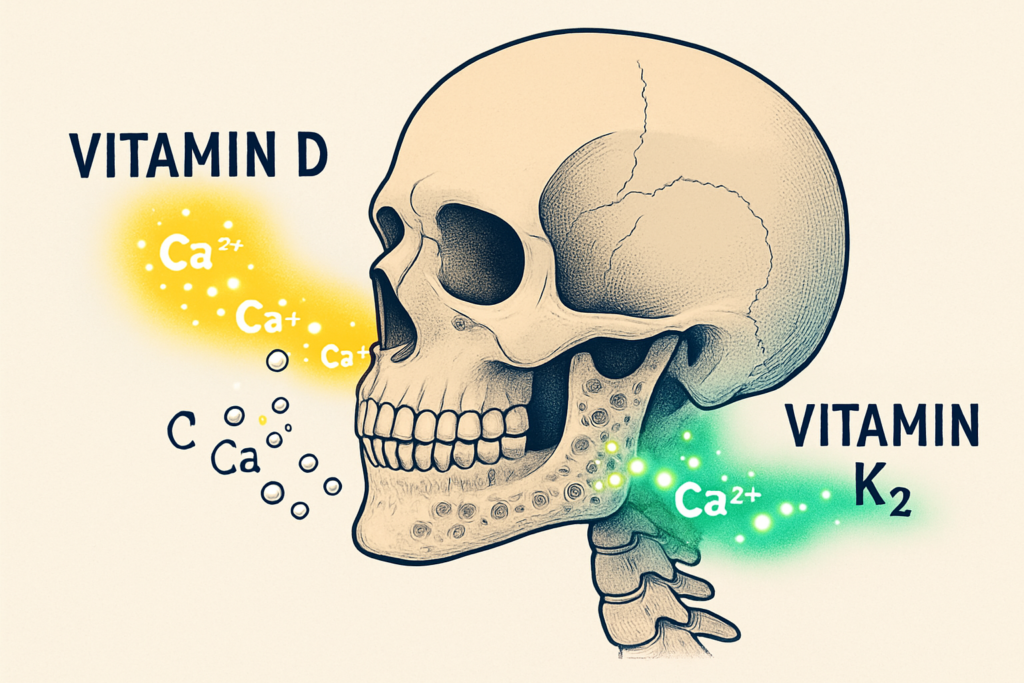
This fat-soluble vitamin is rapidly emerging as the “traffic cop” of calcium, ensuring it goes exactly where it’s needed—into your bones and teeth—and stays out of where it shouldn’t be, like your arteries and soft tissues.
This synergistic relationship is particularly vital for the bones of the face, which are among the most dynamic and structurally important in the human body.
The health of your jawbone, the alignment of your teeth, and even the development of your midface and airway are all profoundly influenced by the delicate balance of these two vitamins.
Understanding this dynamic duo is key to unlocking optimal craniofacial health, especially during critical growth periods.
Vitamin D: The Calcium Gatekeeper ☀️
Vitamin D, often called the “sunshine vitamin,” plays a foundational role in bone metabolism.
Its primary function is to enhance the absorption of calcium from the gut.
Without sufficient Vitamin D, your body can only absorb a fraction of the calcium you consume, regardless of how calcium-rich your diet is.
In the context of facial health, a deficiency in Vitamin D3 has been directly linked to developmental issues.
Studies have shown that Vitamin D3 deficiency can influence maxillary development, potentially contributing to malocclusion (misaligned bite) Vitamin D3 Deficiency and Maxillary Development.
Furthermore, severe Vitamin D deficiency in children can lead to rickets, which often manifests with craniofacial malformations, including delayed tooth eruption and structural deformities of the jaw Vitamin D and Craniofacial Malformations.
The Vitamin D Receptor (VDR) is present in bone cells, and its signaling is essential for the proper formation and remodeling of bone tissue, including the delicate cartilage structures that form the basis of the face.
In essence, Vitamin D is responsible for making calcium available for the bone-building process.
It is the essential first step in ensuring your facial bones have the raw materials they need to grow strong and wide.

Vitamin K2: The Calcium Traffic Cop 🚦
If Vitamin D is the gatekeeper, Vitamin K2 is the precise director.
Its role is to activate specific proteins that guide calcium to the correct locations.
The two most important Vitamin K2-dependent proteins are Osteocalcin and Matrix Gla Protein (MGP).
Osteocalcin is produced by osteoblasts (bone-building cells) and, once activated by K2, binds calcium and incorporates it into the bone matrix, increasing bone mineral density.
MGP, on the other hand, prevents calcium from depositing in soft tissues, such as the walls of blood vessels, kidneys, and, crucially, the cartilage and soft tissues of the face.
In the context of facial bone health, K2’s role is revolutionary.
It is theorized to be a key factor in promoting proper midface growth, which is essential for a broad palate, straight teeth, and an open airway Vitamin K2 and Midface Growth.
A lack of K2 during developmental years may contribute to an underdeveloped jaw and a constricted airway, leading to breathing issues and poor facial aesthetics.
By ensuring calcium is properly utilized, K2 helps to fortify and improve jawbone density, preventing deterioration, especially in the alveolar bone that supports the teeth K2 and Jawbone Density.
Vitamin K2 is the critical factor that transforms absorbed calcium into structurally sound, well-formed facial bone.
The Synergy: D3 and K2 Working Together 🤝
The true power of these vitamins lies in their synergy.
Vitamin D promotes the production of the very proteins (like Osteocalcin) that Vitamin K2 needs to activate.
Taking Vitamin D without sufficient K2 is like hiring a construction crew (Osteocalcin) but not giving them a blueprint or a foreman (K2) to direct the materials (Calcium).
The result can be an abundance of calcium in the bloodstream, but a failure to properly integrate it into the bone structure.
This is why many health professionals now recommend supplementing with both D3 and K2, particularly the MK-7 form of K2, which has a longer half-life and is more effective at reaching bone tissue.
The combined effect is a powerful mechanism for bone remodeling, which is the continuous process of breaking down old bone and building new bone.
This process is constant in the jawbone, which must adapt to the forces of chewing and the potential movement from orthodontic treatment.
The synergistic interplay between D and K is beneficial not just for the large bones of the body, but for the intricate, growth-dependent structures of the face Synergistic Interplay of D and K.
This partnership is the key to maximizing bone strength and ensuring calcium is deposited precisely where it is needed for a strong, well-developed facial structure.
Dietary Sources and Supplementation 🍎
While Vitamin D is primarily synthesized through sun exposure, it is also found in fatty fish, egg yolks, and fortified foods.
Vitamin K2, however, is much harder to obtain from a typical Western diet.
It is found predominantly in fermented foods and animal products, specifically those from animals that have grazed on green grass.
| Vitamin | Primary Function in Bone Health | Key Dietary Sources | Facial Health Benefit |
|---|---|---|---|
| Vitamin D3 | Enhances Calcium Absorption from the gut. | Sunlight, Fatty Fish (Salmon, Mackerel), Fortified Milk/Cereals. | Provides raw material for bone growth; prevents rickets-related malformations. |
| Vitamin K2 (MK-7) | Activates proteins (Osteocalcin, MGP) to direct calcium into bone. | Nattō (fermented soybeans), Goose Liver, Grass-fed Dairy, Egg Yolks. | Promotes proper jaw and midface development; fortifies jawbone density. |
The most potent source of K2 is Nattō, a traditional Japanese fermented soybean dish, which contains the highly bioavailable MK-7 form.
For those who do not consume Nattō, obtaining sufficient K2 from diet alone can be challenging, making supplementation a popular and often necessary choice.
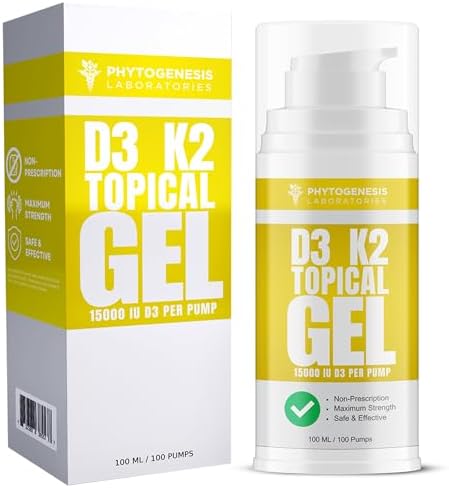
When choosing a supplement, look for a combination of Vitamin D3 and Vitamin K2 (preferably MK-7) to ensure the synergistic effect is maximized.
Always consult with a healthcare professional before starting any new supplement regimen to determine the correct dosage for your individual needs.
Conclusion: Investing in Your Facial Foundation 💯
The health of your facial bones—your jaw, your maxilla, and the structure supporting your teeth—is not just a matter of genetics; it is a matter of nutrition. 💡
The traditional focus on Vitamin D and Calcium alone is incomplete.
The inclusion of Vitamin K2 is the missing piece of the puzzle, providing the crucial direction needed for calcium to build a strong, well-developed craniofacial structure.
For children, this nutritional balance is paramount for achieving their full genetic potential for jaw and airway development.
For adults, it is essential for maintaining jawbone density, supporting dental health, and preventing deterioration.
By prioritizing the synergistic intake of Vitamin D3 and K2, you are making a simple yet profound investment in the foundation of your smile and your overall health.
Think of D3 as the delivery driver and K2 as the construction foreman—you need both for a successful build.
Key Takeaways and Actionable Steps ✅
- Understand the Synergy: Vitamin D3 absorbs calcium; Vitamin K2 directs it to the bone. They must be taken together for optimal results.
- Prioritize K2 (MK-7): The MK-7 form of Vitamin K2 is the most effective for bone health due to its long half-life.
- Dietary Focus: Incorporate K2-rich foods like Nattō, grass-fed dairy, and egg yolks into your diet.
- Consult a Professional: If you have concerns about jaw development or bone density, discuss D3 and K2 supplementation with your doctor or dentist.
- Support Growth: Ensure children and adolescents receive adequate D3 and K2 during their peak craniofacial growth years.
A strong facial structure starts from the inside out, powered by the right nutritional building blocks.
Invest in your health, and your face will thank you for it.
Stay healthy, stay informed! 🤓