



The Hidden Impact of Your Bite: Understanding Facial Asymmetry 🧐
A perfectly symmetrical face is a rarity; most people have some degree of natural asymmetry. 💡
However, when the difference between the left and right sides of the face becomes noticeable, it can often be traced back to functional habits, particularly the way we chew [1].
Unilateral, or uneven, chewing is a common habit where an individual consistently favors one side of their mouth over the other.
This seemingly innocuous habit can have a profound and visible impact on the structure and balance of the face over time.
The primary consequence is the uneven development of the masticatory muscles, leading to a condition known as masseter muscle hypertrophy on the preferred chewing side [2].
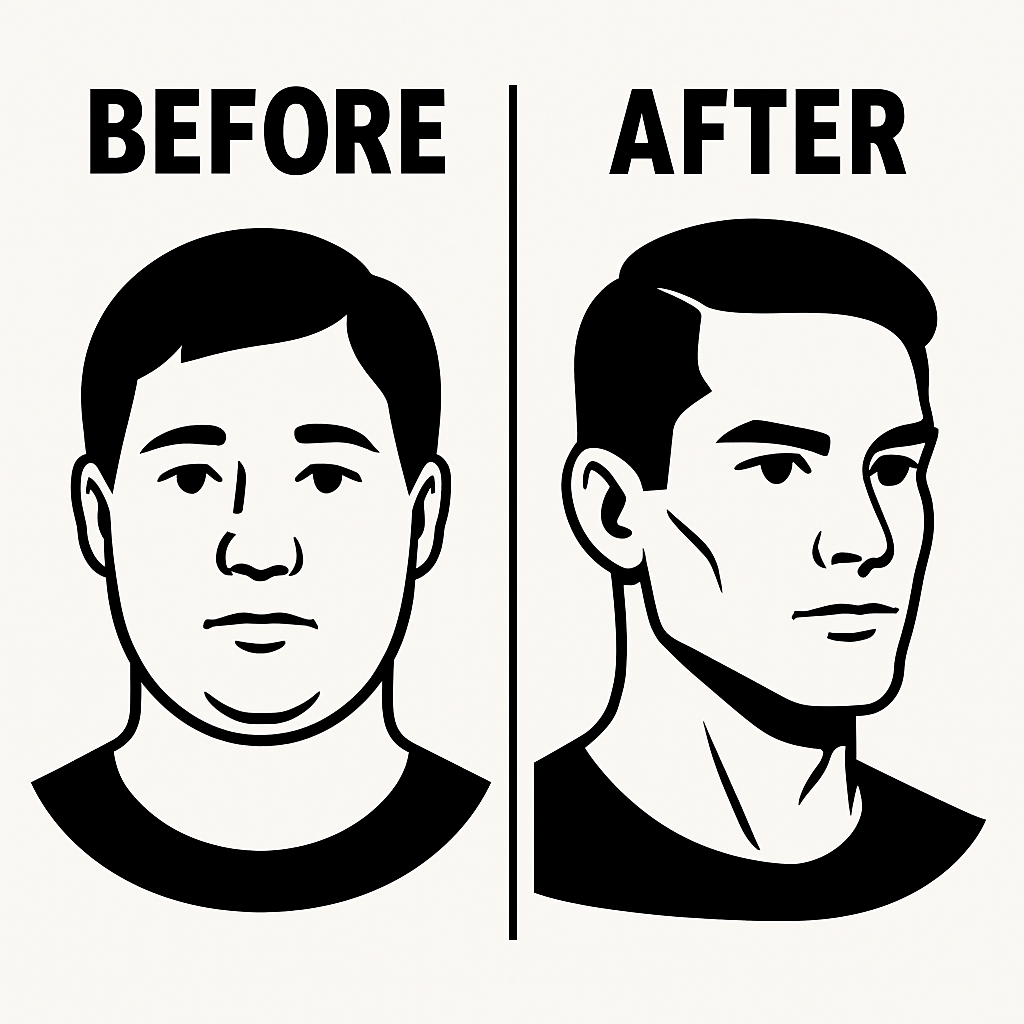
Fortunately, this type of functional asymmetry is often reversible or significantly reducible through conscious habit modification and targeted exercises.
The Mechanism of Uneven Development ⚖️
The masseter muscle is one of the strongest muscles in the body, responsible for closing the jaw during chewing.
When you consistently chew on one side, you are essentially giving the masseter muscle on that side a constant, intense workout.
Just like lifting weights with only one arm, this leads to the muscle on the dominant side becoming larger and stronger—a condition called unilateral masseter hypertrophy [3].
The hypertrophied masseter muscle adds volume to the lower face, making the jawline on the preferred side appear wider, squarer, and more prominent.
This muscular imbalance can also affect the underlying bone structure.
Studies suggest that chewing on one side strengthens the bones and muscles unilaterally, and the volume of the chin may even become larger on the side opposite to the habitual chewing side [1].
Furthermore, the uneven strain can contribute to issues with the temporomandibular joint (TMJ) on the non-chewing side, which is forced to work harder to stabilize the jaw.
Identifying the Root Cause of Unilateral Chewing 🦷
Before attempting to correct the asymmetry, it is crucial to understand why you are chewing unevenly.
The preference is rarely a conscious choice; it is usually a response to an underlying issue.
| Underlying Cause | Explanation and Impact |
|---|---|
| Dental Pain or Issues | A cavity, sensitive tooth, missing tooth, or ill-fitting dental work on one side will naturally cause you to favor the pain-free side. |
| Malocclusion (Bad Bite) | If your upper and lower teeth do not align properly, one side may offer a more comfortable or efficient bite, leading to a preference [4]. |
| TMJ Dysfunction | Pain, clicking, or limited movement in the temporomandibular joint on one side can force the jaw to shift and favor the opposite side. |
| Habitual Posture | Sleeping on one side, resting your chin on your hand, or carrying a heavy bag on one shoulder can all contribute to muscular and skeletal imbalances. |
If you suspect a dental or joint issue, a consultation with a dentist or orthodontist is the most important first step to address the root cause.
Corrective Strategies: Rebalancing the Masticatory System 🎯
The goal of natural correction is to retrain the muscles to work symmetrically and to reduce the hypertrophy on the dominant side.
This requires a combination of conscious habit modification and targeted exercises.
Habit Modification: The Foundation of Symmetry 🔄
The most direct way to reduce the asymmetry is to stop overworking the dominant masseter muscle.
This involves a conscious effort to switch your chewing to the non-dominant, smaller side.
- Conscious Chewing: During every meal, pay close attention to which side you are chewing on and deliberately shift the food to the non-dominant side.
- Soft Diet: Temporarily reducing the intake of hard, chewy foods (like gum, tough meats, or hard candies) will reduce the workload on the masseter muscles, allowing the hypertrophied side to atrophy slightly.
- Bilateral Chewing: Aim for a balanced chewing pattern, where you alternate sides frequently, rather than exclusively favoring the weaker side.
- Avoid Clenching: Be mindful of daytime clenching or grinding, which can further exacerbate masseter hypertrophy.
Targeted Exercises and Stretches for Balance 🤸
Targeted exercises can help to relax the overdeveloped masseter and strengthen the weaker side.
Masseter stretches are particularly important for the dominant side to encourage muscle relaxation and reduction in size.
- Masseter Release (Dominant Side): Place your index and middle fingers on the dominant masseter muscle (the bulge you feel when you clench). Gently apply pressure and massage the muscle in circular motions for 30–60 seconds to encourage relaxation and blood flow.
- Jaw Opening Stretch: Slowly open your mouth as wide as comfortable, hold for 5 seconds, and then slowly close. This helps to stretch the masseter and improve joint mobility.
- Resistance Exercise (Non-Dominant Side): Place your fist under your chin and slowly open your mouth against the gentle resistance of your fist. This helps to strengthen the muscles on the weaker side.
The Role of Posture and Tongue Position 🧘
Facial asymmetry is rarely an isolated issue; it is often connected to overall body posture.
A head tilt, shoulder imbalance, or scoliosis can all contribute to an uneven jaw position and, consequently, uneven chewing.
Maintaining a neutral head and neck posture, with the ears aligned over the shoulders, is vital for allowing the jaw to rest in a balanced position.
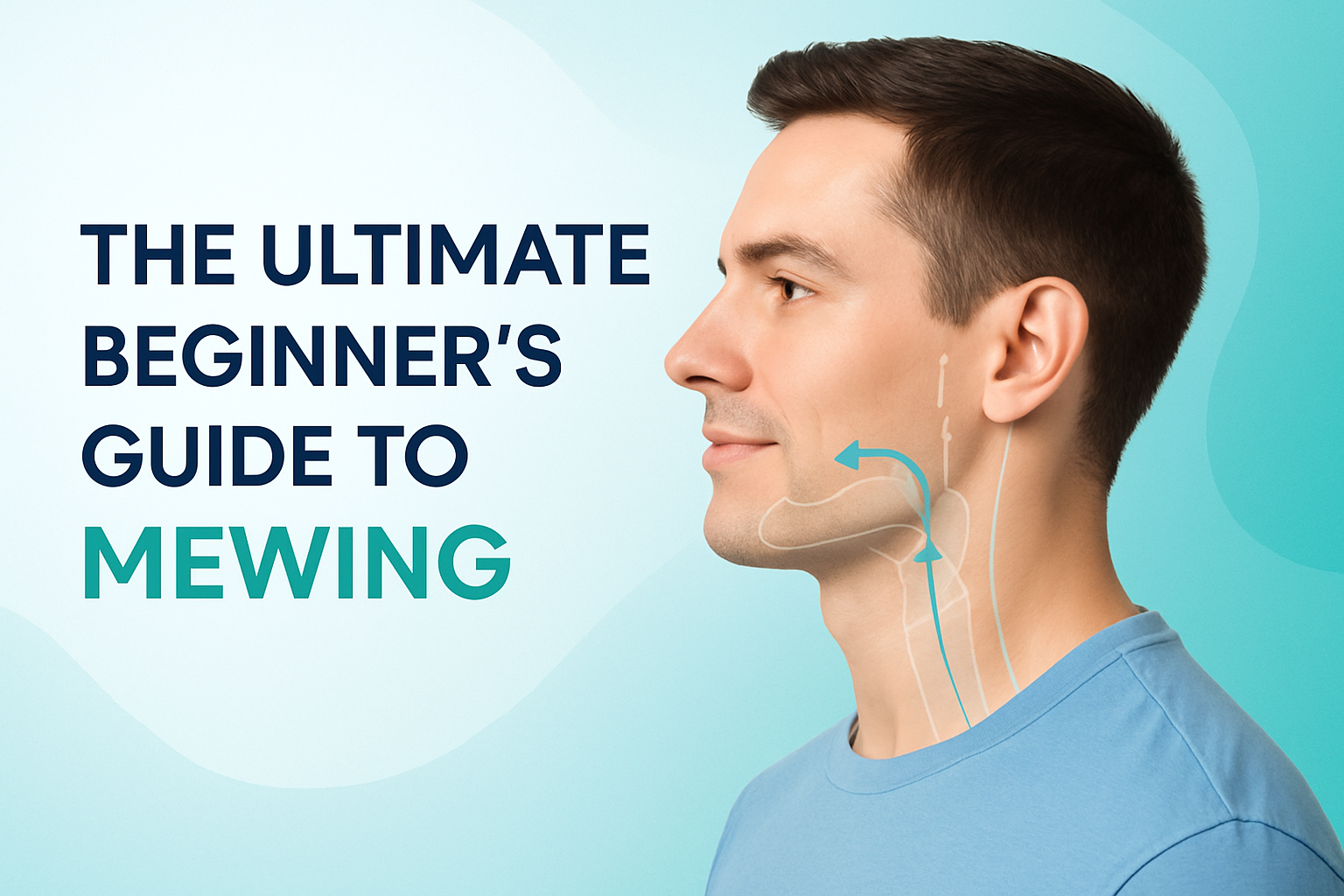
Furthermore, proper tongue posture, as advocated by the Mewing technique, can help to stabilize the maxilla and mandible, promoting a more symmetrical resting position for the jaw [5].
The tongue acts as a natural palate expander and stabilizer, and its correct position against the roof of the mouth can help to counteract the forces of uneven muscle development.
This holistic approach, addressing both the chewing habit and the underlying posture, offers the best chance for long-term correction of facial asymmetry. 🤓
Summary of Corrective Actions for Facial Asymmetry 📌
Correcting facial asymmetry caused by uneven chewing is a commitment to retraining deep-seated habits.
Consistency is the key to seeing gradual, natural changes.
| Action Category | Goal | Key Technique |
|---|---|---|
| Habit Modification | Rebalance the workload on the masseter muscles. | Consciously chew on the non-dominant side and reduce hard, chewy foods. |
| Muscle Relaxation | Reduce hypertrophy on the dominant, larger masseter muscle. | Perform daily masseter release and massage on the dominant side. |
| Muscle Strengthening | Build up the strength of the weaker, non-dominant masseter muscle. | Use gentle resistance exercises on the non-dominant side. |
| Postural Correction | Ensure the jaw rests in a neutral, balanced position. | Maintain proper tongue posture and neutral head/neck alignment. |
Remember to consult a professional if you experience pain or if the asymmetry is severe, as underlying dental issues may require clinical intervention. 💯
External Resources and Scientific References 📚
For further reading and scientific context, please consult the following high-authority sources:
- [1] Facial asymmetry and chewing sides in twins – Acta Odontologica Scandinavica
- [2] Masseter Muscle Hypertrophy: To Chew or Not To Chew? – USC Ostrow School of Dentistry
- [3] Chewing Side Preference – Impact on Facial Symmetry,… – Journal of Oral and Maxillofacial Research
- [4] Malocclusion (Misaligned Bite): Types & Treatment – Cleveland Clinic
- [5] 3 Proven Exercises to Fix an Asymmetrical Jaw Naturally – Orthodontics Scottsdale
Video Tutorials for Practice 🎥
To see these techniques in action, check out these helpful videos:
Achieving facial symmetry is a journey of awareness and consistent effort. 🤓