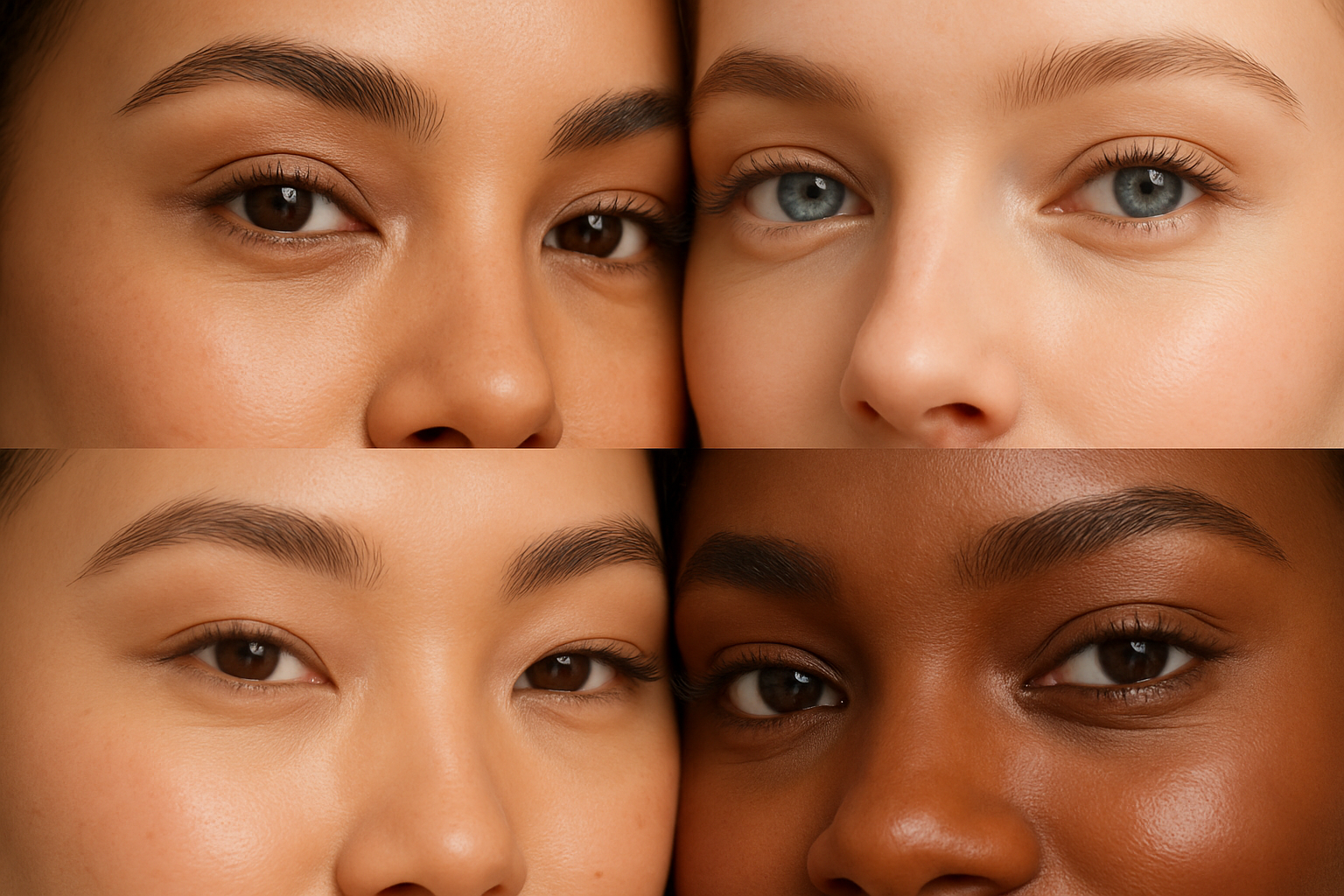


The Subtle Angle That Defines the Eye: An Introduction to Canthal Tilt 📐
In the complex landscape of facial aesthetics, the eyes are arguably the most critical feature, conveying emotion, vitality, and youthfulness. Within the architecture of the eye, a subtle yet profoundly influential factor is the Canthal Tilt. 👁️
The canthal tilt refers to the angle formed by an imaginary line drawn between the medial canthus (the inner corner of the eye) and the lateral canthus (the outer corner of the eye). This angle, often measured in degrees, is a powerful determinant of how the eyes—and by extension, the entire face—are perceived. 🧐
While the concept has gained significant traction in popular culture, particularly in discussions of “looksmaxxing,” its aesthetic significance is deeply rooted in scientific literature, specifically in the fields of craniofacial surgery and psychological perception. [1]
This deeply researched analysis will move beyond anecdotal claims to provide a quantitative, science-backed understanding of positive versus negative canthal tilt, its role in attractiveness, and the latest surgical and non-surgical techniques used to optimize this critical angle. We will prioritize the freshest sources to ensure the most current insights. 🎯
Quantitative Measurement: Defining the Tilt 📏
To move from subjective observation to objective analysis, the canthal tilt must be precisely measured. The measurement is typically taken relative to a horizontal reference line, such as the interpupillary line or the Frankfort Horizontal Plane. 📐
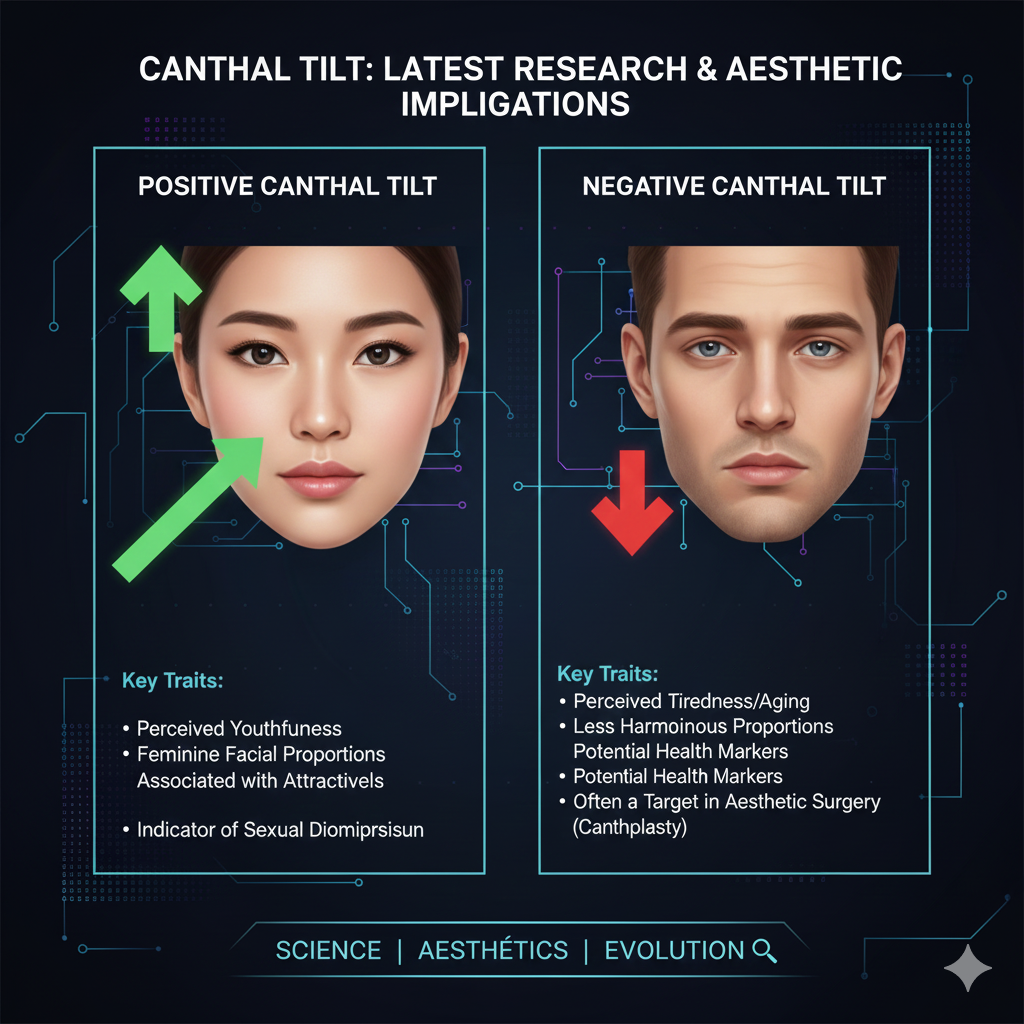
Positive Canthal Tilt: The Aesthetic Ideal ✅
A Positive Canthal Tilt occurs when the lateral canthus (outer corner) is positioned higher than the medial canthus (inner corner). ⬆️
This upward slant is widely considered the aesthetic ideal, as it is associated with: 🌟
- Youthfulness: In children, the canthal tilt is often more positive, and a loss of this tilt is a common sign of aging due to soft tissue laxity and orbital bone resorption. [2]
- Alertness and Vitality: The upward angle creates a more “open” and “awake” appearance, conveying energy and health.
- Sexual Dimorphism: While both sexes benefit from a positive tilt, it is a key feature of the feminine ideal, contributing to the “foxy eye” or “almond eye” shape.
Quantitative studies on attractive Caucasian celebrities have found an average canthal tilt significantly higher than the general population, with angles often exceeding 6.5 degrees in males and 8.5 degrees in females. [3]
Negative Canthal Tilt: The Tired Look 😔
A Negative Canthal Tilt occurs when the lateral canthus is positioned lower than the medial canthus. ⬇️
This downward slant is aesthetically undesirable as it is strongly associated with: 💔
- Aging and Fatigue: It is a classic sign of periorbital aging, often caused by the descent of the midface fat pads and laxity of the lateral canthal tendon.
- Sadness or Tiredness: The downward angle can create a perpetually sad, tired, or droopy appearance, even when the individual is well-rested.
- Ocular Dystopia: In severe cases, a negative tilt can be a sign of vertical orbital dystopia, a condition where the eye sockets are vertically misaligned.
Even a tilt of -2 degrees can be perceived as significantly less attractive and more indicative of fatigue or poor health. 📉
The Psychological Impact: Perception of Character Traits 🧠
The canthal tilt does more than just affect perceived attractiveness; it subtly influences the perception of character traits, a finding supported by recent psychological studies. [4]
Tilt and Trustworthiness 🤝
A study published in 2025 investigated the impact of the lateral canthal height on the perception of character traits among over 2,000 participants. The findings suggested a complex interplay: 🔄
- Positive Tilt: While strongly correlated with attractiveness and femininity, an extreme positive tilt can sometimes be perceived as less trustworthy or more dominant, possibly due to its association with a “sharp” or “intense” gaze.
- Negative Tilt: A negative tilt, while reducing attractiveness, can sometimes be associated with lower dominance, though it is strongly linked to perceived sadness or disgust.
The ideal, therefore, is a moderate, positive tilt that balances the perception of youthfulness and alertness with approachability and trustworthiness. ⚖️
The Role of Sexual Dimorphism and Race 🌍
The ideal canthal tilt is not a monolithic standard; it varies significantly based on sex and ethnic background. 🧬
Gender Differences 🚻
In general, the feminine ideal tolerates and often requires a more pronounced positive tilt than the masculine ideal. 💖
- Female: The ideal is a strong, upward slant (e.g., 8-10 degrees) that contributes to the characteristic “almond” shape, often achieved through a higher lateral eyebrow position.
- Male: The ideal is a positive but more subtle tilt (e.g., 4-6 degrees), with a lower, flatter eyebrow position that contributes to a more intense, masculine gaze.
These differences are linked to the underlying skeletal structure, where male orbits tend to be squarer and more robust, while female orbits are rounder and more delicate. [5]
Racial and Ethnic Variations 🌏
Recent 3D analysis studies comparing Caucasian and East Asian populations have highlighted significant morphological differences in the periorbital region. 🧐
- East Asian: The canthal tilt is often naturally more positive, and the medial canthus can be covered by an epicanthal fold. Aesthetic procedures in this population often focus on double eyelid surgery and medial canthoplasty to further enhance the eye shape.
- Caucasian: The aesthetic focus is often on correcting the age-related descent of the lateral canthus to restore a positive tilt.
A successful aesthetic intervention must respect these inherent ethnic differences to achieve a natural and harmonious result. 🤝
Aesthetic Interventions: Correcting the Negative Tilt 🛠️
For individuals with a negative canthal tilt, a range of surgical and non-surgical options exist to elevate the lateral canthus and restore a positive angle. 🎯
Surgical Correction: Canthoplasty and Canthopexy 🔪
The gold standard for permanent correction of a negative canthal tilt is surgery, specifically Canthoplasty or Canthopexy. 💉
| Procedure | Mechanism of Action | Ideal Candidate |
|---|---|---|
| Lateral Canthopexy | Tightens the lateral canthal tendon without detaching it from the bone. | Mild to moderate laxity, often performed during a lower blepharoplasty. |
| Lateral Canthoplasty | Detaches, repositions, and re-sutures the lateral canthal tendon to a higher point on the orbital rim. | Significant negative tilt, severe laxity, or a desire for a dramatic upward slant. |
These procedures are often combined with a midface lift or lower blepharoplasty to address the underlying soft tissue descent that contributes to the negative tilt. 🔄
Non-Surgical Enhancement: Fillers and Threads 🧵
For temporary or subtle correction, non-surgical methods can be highly effective: 💉
- Dermal Fillers: Strategic placement of dermal fillers in the lateral brow and temple area can provide structural support, indirectly lifting the tail of the eyebrow and the lateral canthus. [6] This is a “scaffolding” technique that restores volume lost due to aging.
- Thread Lifts: Absorbable barbed sutures (threads) can be inserted under the skin to physically lift and suspend the lateral brow and canthus, creating a temporary “foxy eye” effect. This effect is temporary, lasting typically 6-18 months.
- Botulinum Toxin: Injecting Botox into the depressor muscles (like the orbicularis oculi) that pull the brow and canthus down can create a subtle, temporary lift by allowing the elevator muscles to dominate.
The Latest Research: Canthal Tilt and Character Perception (2024/2025) 📰
The most recent research, published in 2024 and 2025, continues to refine our understanding of the canthal tilt’s psychological impact. 🧠
The Eyebrow-Canthal Interplay 🤝
A key finding is the strong interrelation between the lateral canthal height and the eyebrow height. The perception of attractiveness is not solely dependent on the canthal tilt but on the harmonious relationship between the two. [4]
For instance, an extremely high eyebrow position, even with a positive canthal tilt, was found to reduce perceived attractiveness and trustworthiness in some studies, while increasing the perception of dominance and threat. This suggests that the ideal is a balanced, moderate lift, not an extreme one. ⚖️
Medial Canthal Tilt: The Inner Corner’s Role 🎯
While the lateral canthus receives the most attention, the position of the medial canthus is also a powerful aesthetic cue. The distance between the medial canthi (intercanthal distance) should ideally be equal to the width of one eye (the “five-eye width” rule). 📏
The medial canthal tilt itself is a strong predictor of female attractiveness, often associated with neotenic (youthful) features. [7] Procedures like medial canthoplasty are sometimes performed to refine the inner corner, contributing to the overall desired eye shape. 🔪
Conclusion: The Pursuit of the Positive Angle 💖
The canthal tilt is a critical, quantifiable feature that profoundly influences the perception of attractiveness, youthfulness, and character. A moderate, positive canthal tilt is the aesthetic ideal, conveying alertness and vitality, while a negative tilt is associated with fatigue and aging. 🌟
The pursuit of this ideal is a sophisticated process that requires a deep understanding of facial anatomy, sexual dimorphism, and the latest aesthetic techniques. Whether through permanent surgical correction (Canthoplasty) or temporary non-surgical enhancement (fillers and threads), the goal is to restore or create a harmonious, upward slant that complements the entire facial structure. 🎯
Consult with a board-certified oculoplastic or facial plastic surgeon to determine the most appropriate, safe, and effective path to achieving your desired canthal tilt. 👩⚕️
Further Exploration and Resources 📚
To explore the science of canthal tilt and its aesthetic implications, consult these authoritative and recent resources: 🔬
Facial aesthetic ideals: a literature summary of supporting evidence (2024)
Analysis of 100 Facial Points in 42 Caucasian Celebrities (2023)
Diagnostic analysis of vertical orbital dystopia and canthal tilt (2020)
Upward Canthal Tilt: Characteristics and Perceptions of Attractiveness (2025)
Visual Guides to Canthal Tilt Correction 🎥
For visual demonstrations of the techniques and concepts discussed, these videos offer valuable insights: 📺
The eyes are the window to the soul, and the tilt is the frame! 💖