

Introduction: Unpacking the Viral Claim 🤓
The quest for perfect facial symmetry has driven countless trends, from specialized exercises to controversial cosmetic procedures.
Recently, a claim has gained traction across social media platforms: that the way you sleep can permanently alter your facial bone structure, leading to noticeable asymmetry.
This theory suggests that consistently sleeping on one side exerts enough pressure to shift the underlying skeletal framework of the face.
But is this a genuine scientific concern, or is it simply another piece of health misinformation? 🧐
To answer this, we must delve into the science of craniofacial development, the mechanics of sleep pressure, and the critical distinction between soft tissue and bone.
The short answer is complex, varying significantly between adults and children.
For most adults, the effects are primarily dermatological and temporary, but for a developing child, the implications can be far more profound.
The Adult Face: Soft Tissue vs. Skeletal Structure 💡
The human skull, once fully developed, is remarkably resilient.
By the time we reach adulthood, our facial bones have largely fused and calcified, making them resistant to the kind of subtle, sustained pressure exerted by a pillow.
Think of the bone structure as the foundation of a house; it takes a massive, sustained force to shift it.
However, the soft tissues of the face—the skin, fat, and muscle—are a different story.
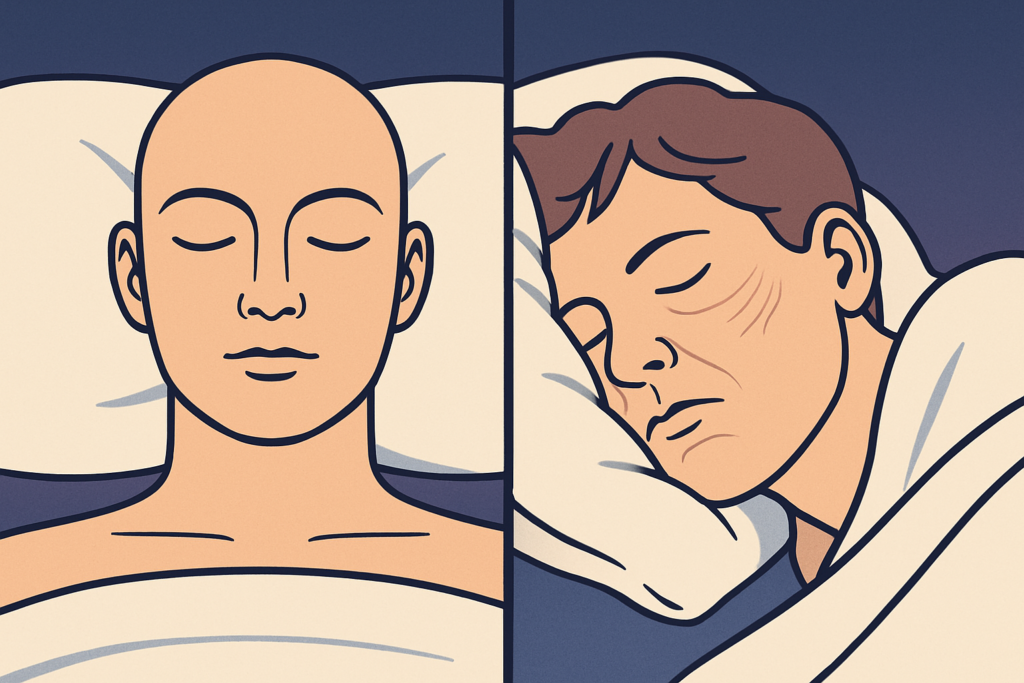
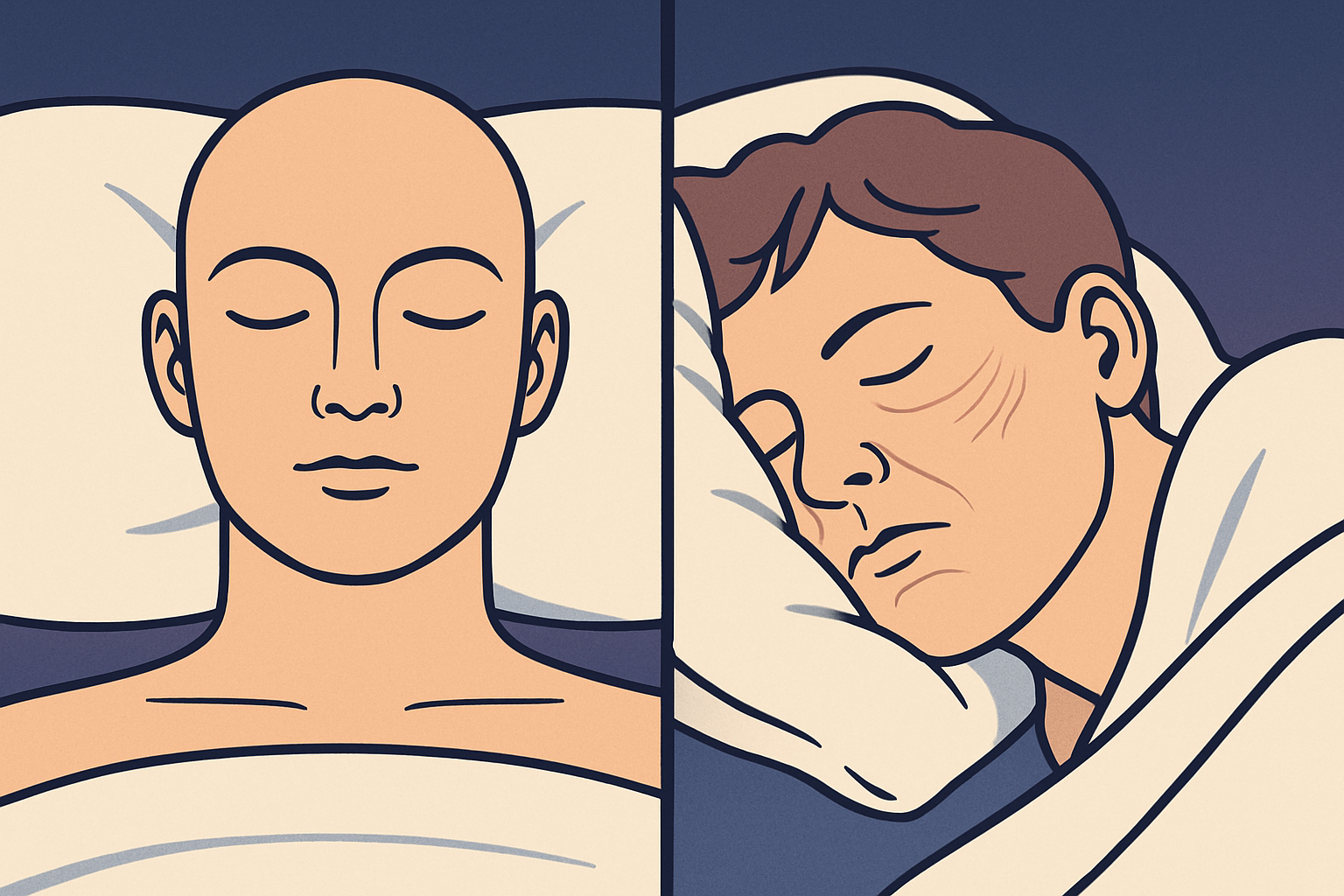
When you sleep on your side or stomach, your face is compressed and distorted against the pillow for hours on end.
This mechanical stress leads to what dermatologists call “sleep wrinkles” or “compression lines.”
Unlike expression lines (which are perpendicular to muscle action), sleep wrinkles are parallel to the direction of the compression.
Over time, especially as collagen and elastin production naturally decline with age, these temporary lines can become permanent creases.
One study, for example, highlighted the role of these forces—compression, tension, and shear—in causing facial distortion during sleep The Aesthetics Society Study.
While this affects symmetry in the sense of skin texture and appearance, it does not fundamentally change the underlying bone.
A key takeaway from experts is that if your facial asymmetry is rooted in your bone structure, changing your sleeping position will not correct it Self Magazine on Facial Asymmetry.
The primary concern for adults is the long-term impact on skin elasticity and the formation of permanent sleep wrinkles.
The Developing Face: A Critical Difference 👶
The conversation shifts dramatically when we talk about infants and young children.
In the early stages of life, the bones of the skull and face are still soft, pliable, and actively growing.
This is where external pressure can have a significant, measurable impact on skeletal development.
The most well-known example is positional plagiocephaly, often referred to as “flat head syndrome.”
Since the “Back to Sleep” campaign was introduced to reduce the risk of Sudden Infant Death Syndrome (SIDS), infants are placed on their backs to sleep.
While life-saving, this practice has led to a rise in plagiocephaly, where the back or side of the baby’s head becomes flattened due to constant pressure.
This flattening of the skull can, in turn, lead to subtle but noticeable facial asymmetry, including uneven ears, forehead bossing, and cheekbone differences.
While plagiocephaly is a cranial issue, the principle of pressure affecting bone growth applies to the entire craniofacial complex.
For older children, consistently sleeping with their face pressed into a pillow could theoretically exert uneven forces on the still-developing maxilla (upper jaw) and mandible (lower jaw).
This is a major point of concern for some orthodontists who specialize in growth modification.
The pressure is not just from the pillow, but from the posture of the head and neck, which can affect muscle tension and jaw position throughout the night.
The younger the individual, the greater the potential for external forces to influence bone growth and development.
The Orthodontic Perspective: Jaw Alignment and TMJ 🦷
Beyond the primary facial bones, the jaw—specifically the mandible and the temporomandibular joint (TMJ)—is particularly susceptible to uneven pressure.
The TMJ is one of the most complex joints in the body, and it is constantly in use, even during sleep.
When you sleep on your side, the weight of your head can push the lower jaw (mandible) out of its natural alignment.
If you consistently favor one side, this chronic, low-grade force can potentially contribute to or exacerbate existing mandibular asymmetry.
Orthodontists often look for signs of uneven jaw growth or a crossbite that may be linked to habitual sleeping or resting positions.
This is not to say that side-sleeping causes severe skeletal asymmetry, but it can be a contributing factor in individuals already predisposed to it.
The uneven pressure can also affect the teeth, especially if you clench or grind your teeth (bruxism) while sleeping.
The constant, one-sided force can influence the position of the teeth and the overall bite, which is a critical component of facial symmetry.
Proper jaw alignment is also intrinsically linked to airway health.
Sleeping positions that push the jaw back can narrow the airway, potentially contributing to snoring or even sleep apnea Airway Health and Sleep Posture.
Therefore, choosing a sleep position that supports neutral jaw alignment is a key recommendation from many dental professionals.
Maintaining a neutral, relaxed jaw position throughout the night is crucial for long-term craniofacial health.
Analyzing the Three Main Sleep Positions 🛌
Understanding the risks and benefits of each position can help you make an informed choice for your health and appearance. 💡
| Sleeping Position | Impact on Facial Symmetry (Bone) | Impact on Facial Symmetry (Soft Tissue) | Impact on Jaw/Airway Health |
|---|---|---|---|
| Back Sleeping (Supine) | Minimal to None (Ideal) | Minimal (Face is not compressed) | Generally Good (Neutral alignment), but can worsen snoring/apnea in some. |
| Side Sleeping (Lateral) | Minimal in Adults; Potential for Mandibular Asymmetry in Children. | High (Causes “sleep wrinkles” on the compressed side). | Moderate Risk (Uneven pressure on TMJ and jaw). |
| Stomach Sleeping (Prone) | Minimal in Adults; High Risk for Infants (SIDS risk, Plagiocephaly). | Very High (Maximum compression and distortion). | Poor (Forces head to turn, straining neck and jaw). |
The evidence overwhelmingly supports back sleeping as the best position for minimizing facial distortion and maintaining symmetry.
It ensures that no external pressure is applied to the face, allowing the soft tissues to rest in their natural, relaxed state.
For those who cannot sleep on their back, specialized pillows—often with cutouts or contours—are designed to minimize the contact and shear forces on the face Dermatology Review on Sleep Wrinkles.
However, the transition to back sleeping can be challenging, as sleep position is a deeply ingrained habit.
Techniques like using a body pillow or placing tennis balls in the back of a pajama top can help train the body to stay supine.
Beyond Sleep: Other Factors in Facial Asymmetry 📌
It is important to remember that facial asymmetry is the norm, not the exception.
Perfect symmetry is a biological rarity, and most people have subtle differences between the left and right sides of their face.
These differences are often caused by a multitude of factors, most of which are far more influential than your sleeping position.
These factors include genetics, which dictates the fundamental shape and size of your bones.
Other causes include uneven chewing habits, which can lead to muscle hypertrophy on one side of the jaw.
Poor posture, such as constantly resting your chin on your hand or holding a phone between your shoulder and ear, also contributes.
Trauma, previous dental work, and even the natural aging process can all play a role in how your face changes over time.
Attributing all facial asymmetry to a single factor like sleeping position is an oversimplification of complex craniofacial biology.
The most significant, correctable factor related to sleep is often the uneven wear and tear on the skin and the potential for jaw misalignment.
If you are concerned about significant asymmetry, consulting with an orthodontist or a maxillofacial surgeon is the most appropriate step.
They can determine if the issue is skeletal, muscular, or a combination of both.
For those interested in the muscular aspect, practices like “mewing” (proper tongue posture) are often discussed in relation to facial symmetry, though scientific evidence remains limited Mewing and Facial Posture.
Ultimately, a holistic approach to health—including proper nutrition, hydration, and good sleep hygiene—will have the most positive impact on your overall appearance and well-being.
Prioritizing back sleeping is a simple, non-invasive step you can take to support your facial health.
Conclusion: A Balanced View 💯
Does sleeping position affect facial symmetry and bone growth? 📌
For adults, the effect on bone growth is negligible, but the impact on soft tissue symmetry (sleep wrinkles) is well-documented and a valid concern.
For infants and children, the effect on bone growth is a serious consideration, with positional plagiocephaly being a direct result of sustained pressure.
For all ages, side and stomach sleeping can introduce uneven forces on the jaw and TMJ, which may contribute to or worsen existing dental and skeletal asymmetries over time.
The best practice for minimizing facial distortion is to adopt a back-sleeping position.
If you must sleep on your side, investing in a supportive pillow that minimizes facial compression is a worthwhile consideration.
Remember, a slightly asymmetrical face is a perfectly normal human trait.
Focus on healthy habits, and let your body rest in the most neutral and supported position possible.
The true goal is not perfect symmetry, but optimal health and function.
Key Takeaways and Actionable Steps ✅
- Prioritize Back Sleeping: This is the only position that guarantees zero compression on the face, protecting against sleep wrinkles and uneven jaw pressure.
- Check Your Pillow: If you are a side sleeper, use a pillow that supports your neck and keeps your head level, minimizing the pressure on your lower jaw and cheek.
- Monitor Children’s Habits: For young children, ensure they are not consistently sleeping with their face pressed into a hard surface, which can influence developing bone structure.
- Address Jaw Pain: If you experience jaw clicking or pain (TMJ symptoms), your sleeping position may be a contributing factor; consult a dental professional.
- Embrace Imperfection: Subtle asymmetry is normal and often goes unnoticed by others; focus on overall health rather than chasing an unattainable ideal.
A consistent, neutral sleeping posture is a simple investment in your long-term facial aesthetics and health.
We encourage you to explore the linked resources to deepen your understanding of this fascinating topic.
Sweet dreams, and sleep symmetrically! 😴