
The Anatomy of a Long Face: Understanding Vertical Maxillary Excess 📐
The term “long face” is often used to describe a facial aesthetic characterized by an increased lower facial height, often resulting in a gummy smile, a retruded chin, and a less defined jawline. 😔
Clinically, this condition is frequently associated with Vertical Maxillary Excess (VME), a skeletal pattern where the maxilla (upper jaw) has grown excessively in the vertical dimension. [1]
This vertical growth imbalance is typically a developmental issue, often linked to a combination of genetic predisposition and environmental factors, particularly chronic mouth breathing and poor oral posture during childhood. 👶
The conventional treatment for VME is orthognathic surgery, which involves physically repositioning the maxilla. 🔪
However, a growing movement advocates for non-surgical methods, primarily facial exercises and posture correction, to address this skeletal pattern. 🧘
This article will explore the scientific basis of these exercises and determine their potential to “fix” a long face. 🧐
The Biomechanical Theory: Posture and Craniofacial Development 🧠
The foundation of using exercises to influence facial structure lies in the principle of biomechanical adaptation. 💪
The facial bones are not static; they are constantly responding to the forces exerted upon them by the surrounding muscles, soft tissues, and, crucially, the tongue. 👅
This concept is central to the field of Orthotropics, which focuses on guiding facial growth through proper oral posture. 🎯
Mouth Breathing vs. Nasal Breathing 👃
One of the most significant environmental factors contributing to a long face is chronic mouth breathing. 🌬️
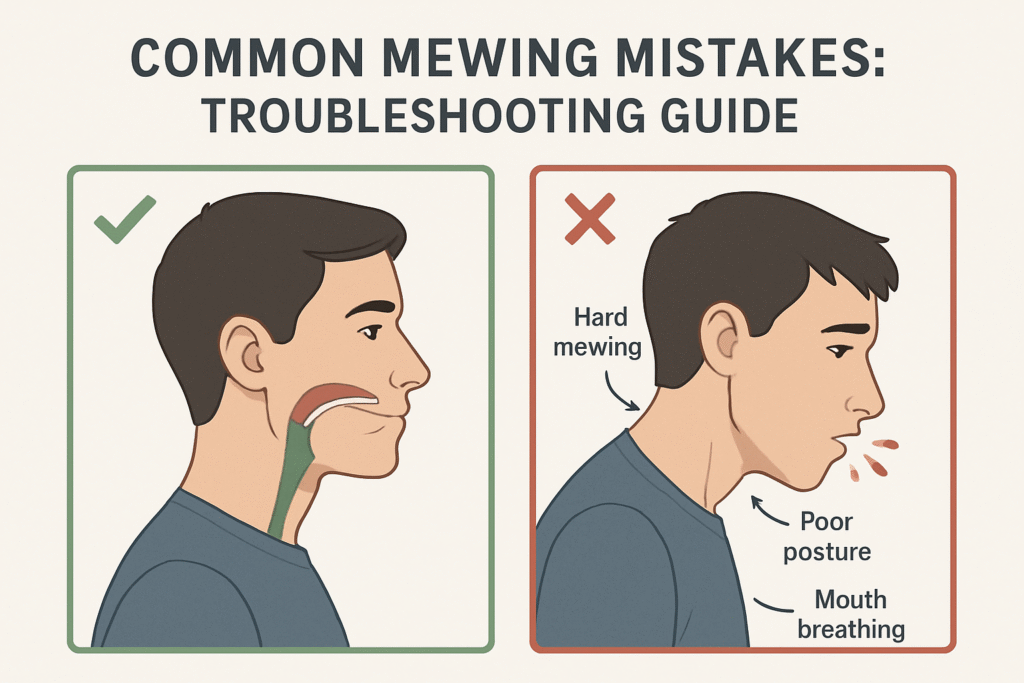
When the mouth is habitually open, the tongue drops from its natural resting position against the palate. ⬇️
This lack of upward pressure from the tongue allows the maxilla to grow downward, exacerbating the vertical dimension of the face. 📏
Conversely, consistent nasal breathing and correct tongue posture (often referred to as “Mewing”) are believed to provide the necessary upward and forward force to encourage horizontal maxillary growth. ⬆️
This change in growth direction is the theoretical mechanism by which a long face could be improved non-surgically. 💡
Facial Exercises: Targeting the Muscles and Bone 🏋️
Facial exercises, or “Face Yoga,” are primarily designed to tone the facial muscles and improve skin elasticity, which can indirectly affect the appearance of the face. 🧘
However, the exercises specifically aimed at correcting a long face focus on strengthening the muscles that support proper oral posture. 🗣️
The Core Exercises for VME Correction 🎯
The exercises prescribed for VME correction are less about “working out” the face and more about retraining habitual muscle and tongue function. 🔄
- Tongue Posture (Mewing): The most fundamental exercise is ensuring the entire tongue rests against the roof of the mouth, especially the posterior third. This provides the constant, light pressure needed to potentially remodel the maxilla. 👅
- Swallowing Retraining: Correct swallowing involves the tongue pressing against the palate, not pushing the teeth outward. Retraining a proper swallow pattern reinforces the correct resting tongue posture. 嚥
- Lip Seal Exercises: Strengthening the orbicularis oris muscle (around the mouth) helps maintain a closed mouth, promoting nasal breathing and preventing the downward rotation of the mandible. 💋
- Neck and Head Posture: Forward head posture can exacerbate the appearance of a long face. Exercises to strengthen the deep neck flexors and retract the head can improve the overall vertical alignment. 🦒
The key to any potential skeletal change is consistency and the application of force over a prolonged period, ideally during the developmental years. ⏳
Scientific Evidence: Skeletal Change in Adulthood 🔬
While the theoretical basis for posture correction is strong, the scientific evidence for achieving significant skeletal change in adults with VME through exercises alone is limited. 😔
The facial bones, particularly the maxilla, are largely fused after the late teens, and the sutures are no longer active growth sites. 🛑
Therefore, the forces generated by the tongue and muscles are generally insufficient to remodel the bone in the same way they can during childhood. 👶
The JAMA Dermatology Study and Soft Tissue 👩⚕️
One of the most cited studies on facial exercises, published in JAMA Dermatology, found that a 20-week regimen of at-home facial exercises modestly improved the appearance of the mid-face and lower face in middle-aged women. [2]
The study suggested that the improvement was likely due to the hypertrophy (enlargement) of the facial muscles, leading to increased fullness and a more youthful appearance. 💪
This is a significant finding for aesthetics, but it primarily addresses soft tissue and muscle tone, not the underlying skeletal structure of a long face. 🦴
| Age Group | Potential for Skeletal Change | Primary Mechanism of Improvement |
|---|---|---|
| Children (Pre-Puberty) | High. Growth plates are active, and bone is highly malleable. | Growth guidance and redirection of the maxilla and mandible. |
| Adolescents (Puberty) | Moderate. Some growth potential remains, especially in the mandible. | Optimization of remaining growth potential. |
| Adults (Post-Skeletal Maturity) | Low to Minimal. Skeletal change is limited to subtle remodeling. | Muscle hypertrophy, improved soft tissue tone, and postural correction. |
For adults with a long face, the improvement from exercises is more likely to come from an improved appearance due to better muscle tone and a more favorable head posture, which can visually shorten the face. 🎭
A Holistic Approach: Beyond the Exercises 🧘
To truly address the long face pattern, a holistic approach that targets the root causes is necessary. 🎯
This involves a combination of functional and structural interventions. 🛠️
Functional Interventions 🗣️
The most effective non-surgical strategies focus on correcting the functional issues that led to the VME pattern. 🔄
- Airway Management: Addressing any underlying issues that cause mouth breathing, such as chronic allergies, enlarged tonsils, or a deviated septum, is paramount. If you can’t breathe through your nose, you can’t maintain proper oral posture. 👃✅
- Myofunctional Therapy: This is a specialized form of therapy that focuses on retraining the muscles of the face and mouth to function correctly, including proper tongue posture and swallowing. 👅
- Orthodontic Appliances: In some cases, functional orthodontic appliances can be used to apply light forces to the maxilla and mandible to encourage a more horizontal growth pattern, particularly in growing patients. 🔗
For adults, while exercises may not change the bone, they can certainly improve the soft tissue envelope and muscle tone, which contributes significantly to the overall aesthetic. 🌟
Conclusion: Realistic Expectations for Adults 🎯
The promise of completely “fixing” a long face with exercises in adulthood is an oversimplification of a complex skeletal issue. 😔
However, the exercises and posture correction techniques are invaluable tools for optimizing soft tissue aesthetics and preventing further vertical growth in younger individuals. 👶
For adults, the benefits lie in improved muscle tone, a more defined jawline due to muscle hypertrophy, and a better head posture that visually shortens the face. 🎭
The most effective path to addressing VME involves a consultation with an orthodontist or maxillofacial surgeon to determine the extent of the skeletal issue and explore all available options, from functional therapy to surgical correction. 🩺
Further Exploration and Resources 📚
To learn more about VME, facial exercises, and myofunctional therapy, explore these authoritative resources: 🔬
Association of Facial Exercise With the Appearance of Aging (JAMA Dermatology)
Non-Traditional and Non-Invasive Approaches in Facial Aesthetics
Does your face need a workout? (Harvard Health)
Quantification of facial asymmetry by 2D analysis
Three-dimensional quantification of facial symmetry in adolescents using laser surface scanning
Visual Guides to Posture and Exercises 🎥
For visual demonstrations of the exercises and posture techniques, these videos offer valuable insights: 📺
Focus on function, and the form will follow! 💖