
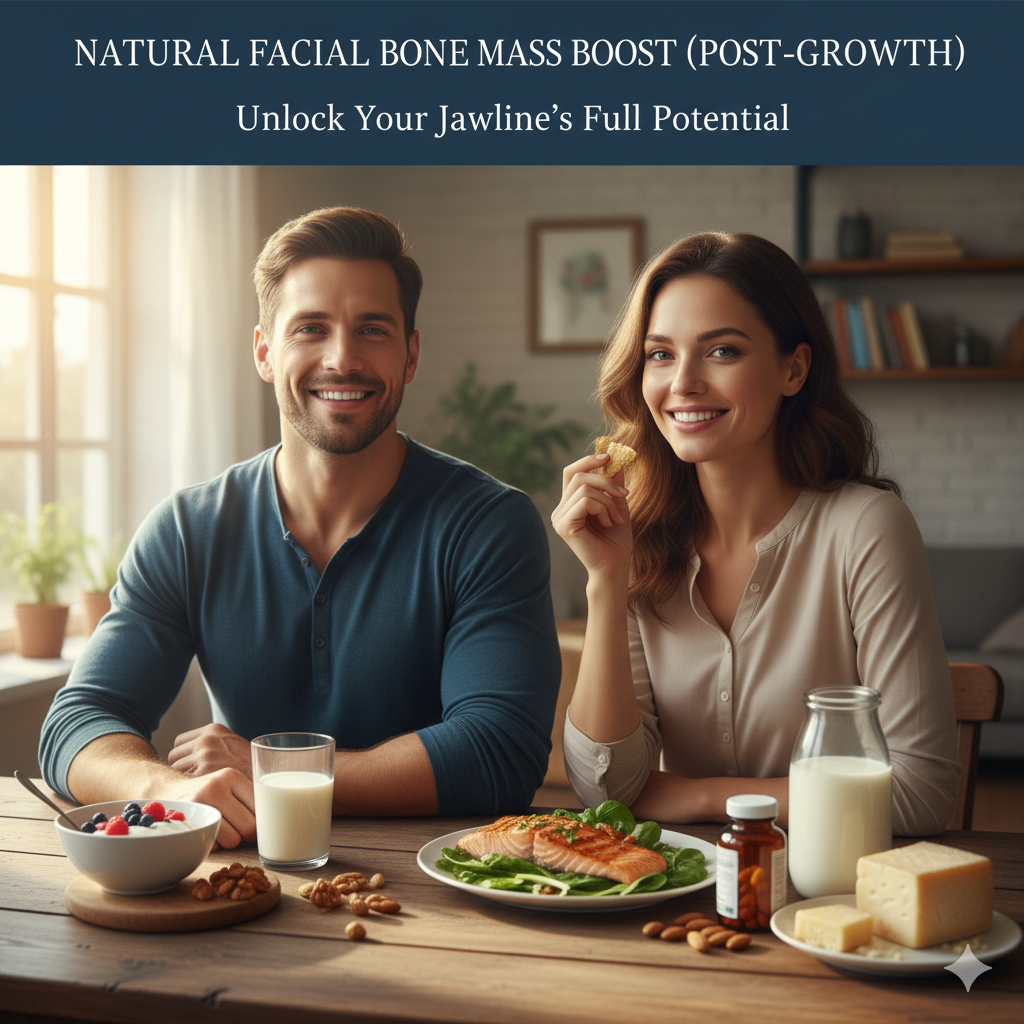



Welcome to the advanced guide on skeletal health and facial structure!
The desire for a strong, defined jawline and prominent facial features is a common aesthetic goal.
While the primary growth of facial bones, such as the maxilla and mandible, concludes after puberty, the bone tissue remains a dynamic, living structure that responds to external forces and internal nutrition throughout life.
The question of How to increase facial bone mass naturally after maturity is complex, but it centers on maintaining and maximizing bone density through scientifically supported methods. 💡
This comprehensive guide will separate fact from fiction, focusing on diet, lifestyle, and mechanical stimulation that can genuinely impact the health and structure of your facial skeleton.
Prepare to build a foundation of lifelong bone health! 🤓
The Science of Bone Remodeling and Facial Structure 🧪
Bone is constantly being broken down and rebuilt in a process called **remodeling**.
This process is governed by a principle known as **Wolff’s Law**, which states that bone tissue will adapt to the loads under which it is placed.
In the craniofacial region, the primary load is generated by **mastication** (chewing).
The jawbone (mandible) and upper jaw (maxilla) are particularly responsive to this mechanical stimulation.
Research has shown that forceful mastication activates bone cells (osteocytes) and is crucial for building and maintaining a stout jaw structure.
Conversely, a soft diet has been shown to have a negative impact on jaw bone metabolism.
Therefore, the key to maintaining or enhancing facial bone mass after growth is to provide consistent, healthy mechanical stimulation and optimal nutrition.
Fact vs. Fiction: The Mewing Debate
The concept of “Mewing”—a technique involving correct tongue posture—has gained viral popularity for its claims of reshaping the jawline in adults.
Here is the straightforward truth: mewing cannot reshape the jawbone of an adult.
Scientific evidence supporting mewing’s jawline-sculpting claims is lacking, and there is no current research suggesting it provides any benefit for jaw structure or the position of facial bones in adults.
While consistent tongue posture is a component of correct oral posture, which is important for overall health, it will not change the bone structure of a mature face.
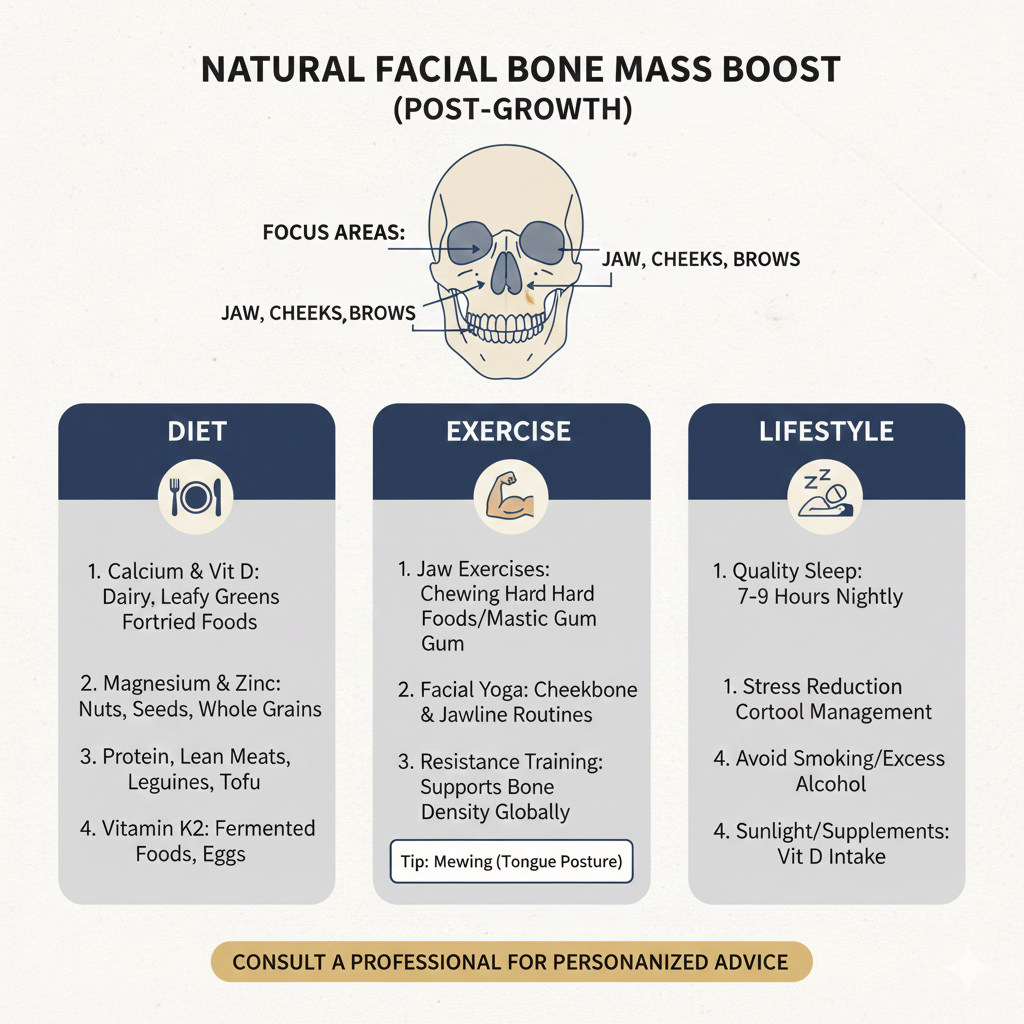
Pillar 1: Mechanical Stimulation Through Mastication 🏋️
Since facial bone mass responds to mechanical load, the most natural and effective way to stimulate the jawbones is through chewing.
This is not about “jaw exercises” but about returning to a diet that requires proper, vigorous chewing.
| Action | Impact on Facial Bone | Practical Application |
|---|---|---|
| Eating Harder Foods | Increases mechanical load on the maxilla and mandible. | Incorporate raw vegetables, nuts, and tougher meats into your diet. |
| Chewing Thoroughly | Ensures sustained force application to the jaw joints and bones. | Focus on chewing food completely on both sides of your mouth. |
| Correct Oral Posture | Supports the maxilla and maintains a forward facial growth pattern. | Rest your tongue on the roof of your mouth, behind your front teeth, when not speaking or eating. |
Consumption of a soft diet has a negative impact on jaw bone metabolism, while mastication of a hard diet has a positive effect. A study on feeding behavior and jaw bone metabolism supports this principle.
This is a lifelong commitment to how you use your jaw, not a quick fix.
Pillar 2: Nutritional Support for Bone Density 🍎
Bone is made of a protein framework and mineral deposits, primarily calcium and phosphate.
To maintain and maximize bone density, your diet must be rich in the building blocks and the co-factors that help absorb them.
This is the most critical factor you can control internally.
- Calcium: The primary mineral component of bone. Top sources include dairy products, dark leafy greens (like kale and collard greens), and fortified foods.
- Vitamin D: Essential for the body to absorb calcium. Sunlight exposure is the best source, but supplements or foods like fatty fish and fortified milk are also necessary, especially in winter months.
- Vitamin K2: Directs calcium to the bones and teeth, preventing it from depositing in soft tissues. Found in grass-fed dairy, egg yolks, and fermented foods like natto.
- Magnesium and Zinc: These trace minerals are co-factors in bone formation. Magnesium is found in nuts, seeds, and whole grains, while zinc is abundant in meat, shellfish, and legumes.
Recent research suggests that olive oil, soy beans, blueberries, and foods rich in omega-3s may also have bone-boosting benefits. The National Osteoporosis Foundation provides a comprehensive guide to foods for bone health.
Conversely, certain foods can contribute to bone loss. Foods high in sodium can lead to calcium loss, so limiting high-sodium items like chips and processed foods is advised.
For a detailed look at the vitamins and minerals needed for strong bones, this video offers great insights:
Pillar 3: Hormonal and Lifestyle Factors 🧘
Hormones play a significant role in bone remodeling, even in adults.
Estrogen, for example, is vital for regulating bone turnover.
Maintaining a healthy hormonal balance is therefore crucial for skeletal health, including the facial bones.
- Weight-Bearing Exercise: While not directly targeting the face, full-body strength training increases overall bone density, which is beneficial for the entire skeleton.
- Avoid Smoking and Excessive Alcohol: Both habits are known to interfere with the body’s ability to absorb calcium and can accelerate bone loss.
- Manage Stress: Chronic stress can elevate cortisol levels, which can negatively impact bone density over time. Incorporate stress-reducing practices like meditation or yoga.
The health of your facial bones is inseparable from your overall skeletal health.
Focusing on systemic bone health is the most effective, science-backed approach to maintaining facial bone mass after maturity.
Medical News Today provides 11 methods for increasing bone density naturally.
For a deeper understanding of the role of hormones in bone remodeling, this video explains the complex process:
The most impactful change you can make is to your diet and chewing habits.
By providing the necessary nutrients and the mechanical load, you are giving your facial bones the best chance to maintain their structure and density.
For a practical guide on how to incorporate these changes, this video offers a routine:
Conclusion: A Foundation of Strength 💖
The pursuit of a stronger facial structure after the natural growth period is a marathon, not a sprint.
The most reliable answer to How to increase facial bone mass naturally after maturity lies in a commitment to three pillars: **mechanical stimulation** through vigorous chewing, **optimal nutrition** rich in bone-supporting vitamins and minerals, and a **healthy lifestyle** that supports hormonal balance.
While viral trends like mewing lack scientific backing for adult bone change, the proven principles of Wolff’s Law and bone nutrition offer a genuine path to maintaining and maximizing the density of your facial skeleton.
Focus on what the science supports, and you will build a foundation of strength that lasts a lifetime.
Chew well, eat right, and stand tall!