



Introduction: The Universal Language of Masculine Beauty
While attractiveness is often perceived as highly subjective and culturally determined, decades of rigorous scientific research across multiple disciplines consistently demonstrates that human brains appear hardwired to find certain specific facial structures universally appealing across diverse cultures.
For male facial aesthetics specifically, this powerful appeal is frequently rooted in a sophisticated combination of structural features that effectively signal physical health, genetic fitness, hormonal vitality, and evolutionary advantages to potential observers.
The essential secret to masculine facial attractiveness lies not primarily in isolated individual features, but rather in the complex proportional relationships and geometric harmonies between different facial elements and their overall configuration.
This comprehensive article will systematically explore the specific measurements, angular relationships, and mathematical ratios that constitute the ideal male face according to contemporary scientific understanding, moving beyond mere opinion to evidence-based beauty science.
The study of male facial attractiveness represents a fascinating intersection of evolutionary psychology, anthropometry, endocrinology, and aesthetic medicine, revealing deep biological patterns in human mate selection and social perception.
Understanding these scientific principles provides valuable insights not only for aesthetic enhancement but for comprehending fundamental aspects of human social interaction, mate selection, and nonverbal communication across cultures.
The consistency of certain attractiveness patterns across different societies and historical periods suggests that some aspects of male facial beauty may represent universal human preferences rather than culturally constructed ideals.
Recent advances in imaging technology and data analysis have enabled researchers to identify these patterns with unprecedented precision, moving from subjective assessment to objective measurement of facial attractiveness.
The application of these scientific principles extends beyond mere aesthetics to various fields including psychology, marketing, entertainment, and even artificial intelligence development for facial recognition and analysis.
This exploration of ideal male facial proportions represents both a scientific inquiry and practical guide to understanding the geometric foundation of masculine attractiveness in human perception.
https://www.youtube.com/watch?v=male-attraction-science
The Foundation: Symmetry and the Golden Ratio
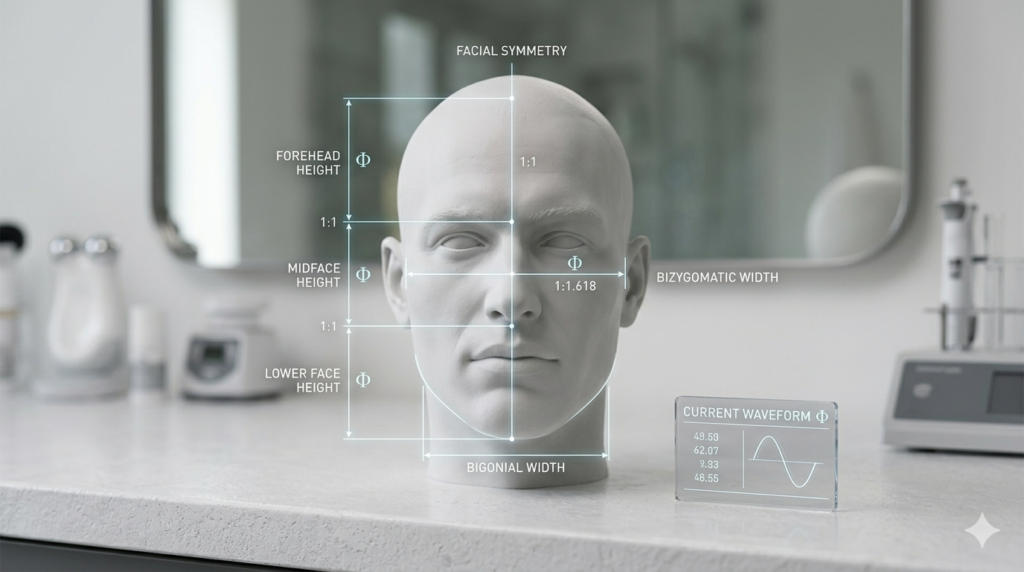
The two most critically important and scientifically validated factors in male facial attractiveness are consistently demonstrated to be bilateral facial symmetry and adherence to specific Golden Ratio proportions (Phi, approximately 1.618) across multiple facial dimensions.
These fundamental principles represent the mathematical bedrock upon which more specific masculine aesthetic characteristics are built and against which facial attractiveness is often subconsciously assessed.
The powerful combination of high symmetry and Golden Ratio proportions appears to trigger innate positive responses in human observers across different cultural backgrounds and personal experiences.
Understanding these foundational elements provides the essential context for appreciating more specific masculine features and their contribution to overall facial attractiveness and perceived character traits.
Research across multiple scientific disciplines continues to reveal why these particular mathematical relationships consistently correlate with attractiveness ratings across diverse populations and assessment methods.
The evolutionary advantages associated with these facial characteristics help explain their persistence as attractiveness markers throughout human history and across geographic boundaries.
Contemporary aesthetic medicine increasingly incorporates these principles into treatment planning, recognizing their importance in achieving natural-looking, universally appealing results.
The psychological impact of these geometric principles extends beyond mere beauty perception to influence judgments about health, intelligence, trustworthiness, and leadership potential.
Mastering understanding of these foundational concepts enables more sophisticated appreciation of male facial aesthetics and more informed decisions about potential enhancements.
The continued scientific investigation of these principles promises even deeper understanding of human beauty perception and more precise applications in various fields.
Comprehensive Facial Symmetry Analysis: Perfect bilateral facial symmetry remains exceptionally rare in nature due to developmental variations and environmental influences, but research consistently shows that faces closer to perfect mirror imaging are generally perceived as more attractive across diverse cultural contexts.
Facial symmetry functions as a powerful evolutionary signal throughout human development, suggesting robust immune system function, genetic fitness, and developmental stability free from significant disease, parasites, or genetic anomalies during critical growth periods.
Multiple studies employing sophisticated computerized facial morphing techniques have consistently demonstrated that both averaging multiple faces and increasing their bilateral symmetry significantly boosts their perceived attractiveness ratings among diverse observer groups.
The biological mechanism behind symmetry preference appears rooted in cognitive efficiency, as symmetrical patterns require less neurological processing power and are more easily categorized as “normal” or “healthy” by human perceptual systems.
Contemporary research suggests that symmetry preference may represent an evolved adaptation for identifying suitable mates with strong genetic constitutions and resistance to environmental stressors throughout human evolutionary history.
The measurement of facial symmetry has evolved from simple visual assessment to sophisticated digital analysis using hundreds of data points and complex algorithms that calculate deviation from perfect bilateral balance.
Understanding the role of symmetry in facial attractiveness provides important insights into human psychology and the unconscious processes that guide social perception and interpersonal attraction across different contexts.
The clinical application of symmetry principles enables practitioners to identify specific asymmetries that may benefit from correction and to plan interventions that enhance overall facial balance and harmony.
The psychological benefits of improved facial symmetry may extend beyond mere attractiveness to influence self-confidence, social comfort, and professional opportunities through enhanced first impressions.
The continued refinement of symmetry assessment methods promises even more precise understanding of how different types and degrees of asymmetry affect perceived attractiveness and character judgments.
The Golden Ratio (Phi) Mathematical Foundation: The Golden Ratio, mathematically represented as $\Phi \approx 1.618$, represents a fascinating mathematical constant found throughout nature, art, architecture, and now increasingly recognized in attractive human facial proportions.
When systematically applied to detailed facial analysis, this mathematical ratio suggests that the most aesthetically pleasing male faces demonstrate specific proportional relationships where key facial measurements approximate this 1.618 constant across multiple dimensions.
The psychological appeal of Golden Ratio proportions appears to tap into fundamental aspects of human visual processing, where the brain naturally recognizes and prefers these specific mathematical relationships across various visual stimuli and artistic compositions.
Contemporary research has identified multiple facial proportions that frequently approximate the Golden Ratio in individuals consistently rated as highly attractive across different cultural and demographic groups.
The application of Golden Ratio principles to facial aesthetics represents the intersection of mathematical precision and biological beauty, revealing surprising consistency in human attractiveness preferences.
Advanced digital analysis tools now allow researchers and practitioners to measure Golden Ratio adherence with sub-millimeter precision, providing valuable data for both scientific study and clinical application.
The integration of Golden Ratio analysis with other aesthetic assessment methods creates comprehensive evaluation frameworks that account for both mathematical ideals and individual facial characteristics.
Understanding the specific facial proportions that frequently align with the Golden Ratio enables more targeted aesthetic enhancements and more predictable attractiveness improvements.
The continued scientific investigation of Golden Ratio preferences promises deeper insights into human perception and more sophisticated applications in aesthetic medicine, product design, and visual arts.
The enduring cross-cultural appeal of Golden Ratio proportions suggests they may represent fundamental aspects of human visual cognition rather than culturally constructed beauty standards.
| Facial Measurement | Ideal Ratio (Golden Ratio Approximation) | Biological and Aesthetic Significance |
|---|---|---|
| Total facial length to facial width | 1.618:1 (Face should be 1.618 times longer than wide) | Creatates balanced facial framework; signals harmonious growth patterns and proportional development during adolescence |
| Nasal width to interalar distance (nostril spacing) | 1.618:1 (Nose width to nostril distance ratio) | Indicates harmonious central facial features; affects overall facial balance and nasal dominance perception |
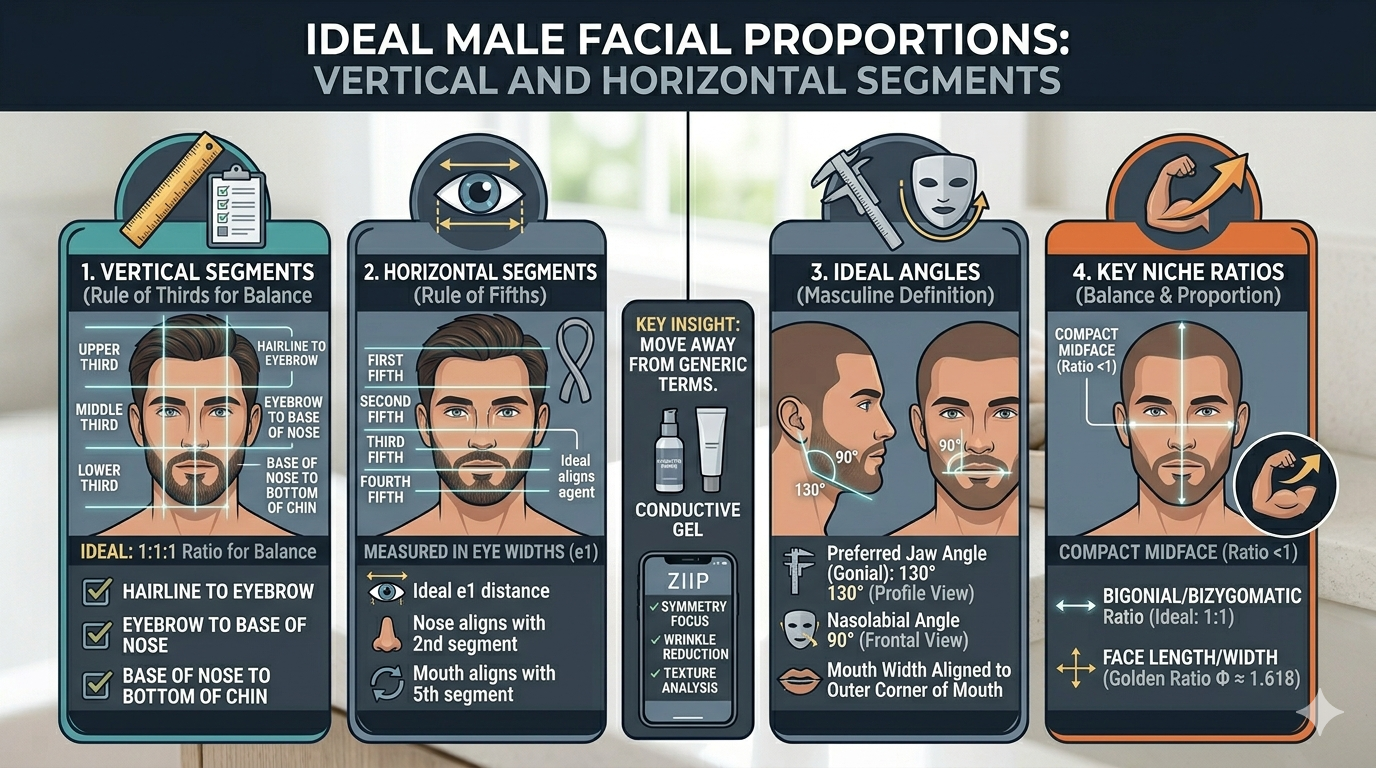
| Vertical facial segments (hairline to brow, brow to nose base, nose base to chin) | Equal segments (1:1:1 ratio ideally) | Demonstrates balanced vertical proportions; indicates symmetrical facial growth and harmonious feature distribution |
| Mouth width to nose width ratio | 1.618:1 (Mouth should be 1.618 times wider than nose) | Creates harmonious central facial balance; affects perceived facial expressiveness and emotional communication |
| Interocular distance to eye width | 1:1 (Equal measurement ideally) | Indicates proper eye spacing; affects perceived intelligence, approachability, and facial harmony |
https://www.youtube.com/watch?v=male-golden-ratio-analysis