The Allure of Symmetry: Why We Seek Balance in the Face 💖
Facial symmetry has long been considered a cornerstone of human attractiveness and health. ✨
From ancient Greek philosophy to modern evolutionary psychology, a balanced face is often perceived as a sign of genetic fitness and developmental stability. 🧬
However, the concept of “perfect” facial symmetry is largely a myth; in reality, no human face is perfectly symmetrical. 🙅♀️
The goal of accurate measurement is not to find perfection, but to quantify the degree of asymmetry and understand its underlying causes, which can range from normal variation to underlying skeletal or muscular issues. 🧐
This guide will explore the best and most accurate scientific methods used today to measure facial symmetry, moving beyond simple visual inspection to advanced quantitative analysis. 🔬
The Evolution of Measurement: From Calipers to Computers 💻
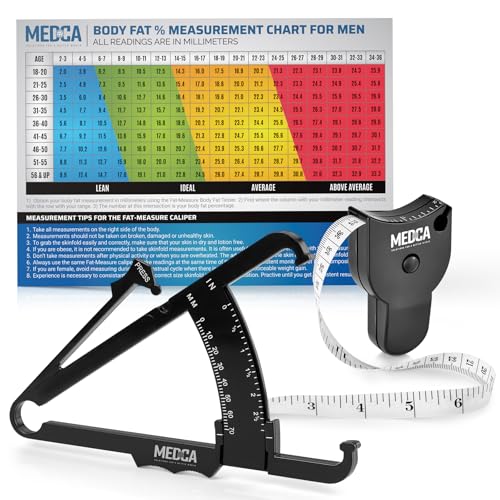
Historically, facial symmetry was assessed using simple tools like calipers and rulers on photographs or plaster casts. 📏
These 2D methods were prone to errors due to head positioning, photographic distortion, and the inherent limitations of projecting a 3D structure onto a 2D plane. 📸
The modern era has ushered in a new standard of accuracy, relying on non-invasive, three-dimensional imaging techniques. 🎯
The Gold Standard: 3D Surface Scanning 🌟
The most accurate way to measure facial symmetry today is through 3D surface scanning, using technologies like laser scanning or stereophotogrammetry. [1]
These methods capture a dense cloud of data points on the face, creating a highly accurate, three-dimensional digital model. 💾
This eliminates the distortion issues of 2D photography and allows for sophisticated quantitative analysis. ✅
The Mirror-Image Superimposition Technique 🔄
The core of 3D symmetry analysis is the mirror-image superimposition technique. 🔄
Specialized software takes the 3D scan of the face, creates a perfect mirror image of one half, and then mathematically superimposes it onto the original scan. 💻
The difference between the original half and the mirrored half is then calculated and visualized, often using a color-coded map. 🌈
This map, known as a color-difference map, provides a precise, millimeter-by-millimeter quantification of asymmetry across the entire facial surface. [2]
This method is considered the most objective and reliable for clinical and research purposes. 🔬
Quantitative Metrics: Beyond the Visual 📊
Accurate measurement relies on specific, quantifiable metrics that move beyond subjective visual assessment. 📏
These metrics are used to calculate an “asymmetry score” for the face. 🎯
Linear and Angular Measurements 📐
Even in 3D analysis, traditional linear and angular measurements between specific anatomical landmarks remain important. 📌
These landmarks include the pupils, the corners of the mouth, the cheekbones (zygoma), and the jaw angles (gonion). 📍
By comparing the distance between a landmark on the right side to the corresponding landmark on the left side, researchers can quantify localized asymmetry. ⚖️
For example, a study on adolescents found that the average difference in linear parameters was less than 1 mm, highlighting the subtle nature of normal asymmetry. [3]
The Root Mean Square (RMS) Deviation 📈
For the overall surface comparison, the most common metric is the Root Mean Square (RMS) deviation. 📈
This value represents the average distance between the original surface and the mirrored surface. 📏
A lower RMS value indicates a higher degree of symmetry. ✅
This single number provides a powerful, objective summary of the overall facial balance. 🌟
| Measurement Technique | Accuracy and Reliability | Primary Application |
|---|---|---|
| 3D Surface Scanning (Laser/Stereophotogrammetry) | Highest. Eliminates 2D distortion and allows for full surface comparison. | Clinical diagnosis, surgical planning, and research. |
| 2D Photographic Analysis (Computerized) | Moderate. Requires strict head positioning and is sensitive to camera angle. | Screening, pre- and post-treatment comparison in a controlled setting. |
| Manual Caliper/Ruler Measurement | Low. Highly subjective and prone to measurement error. | Historical or preliminary assessment only. |
The Myth of the Golden Ratio (Phi) ⚜️
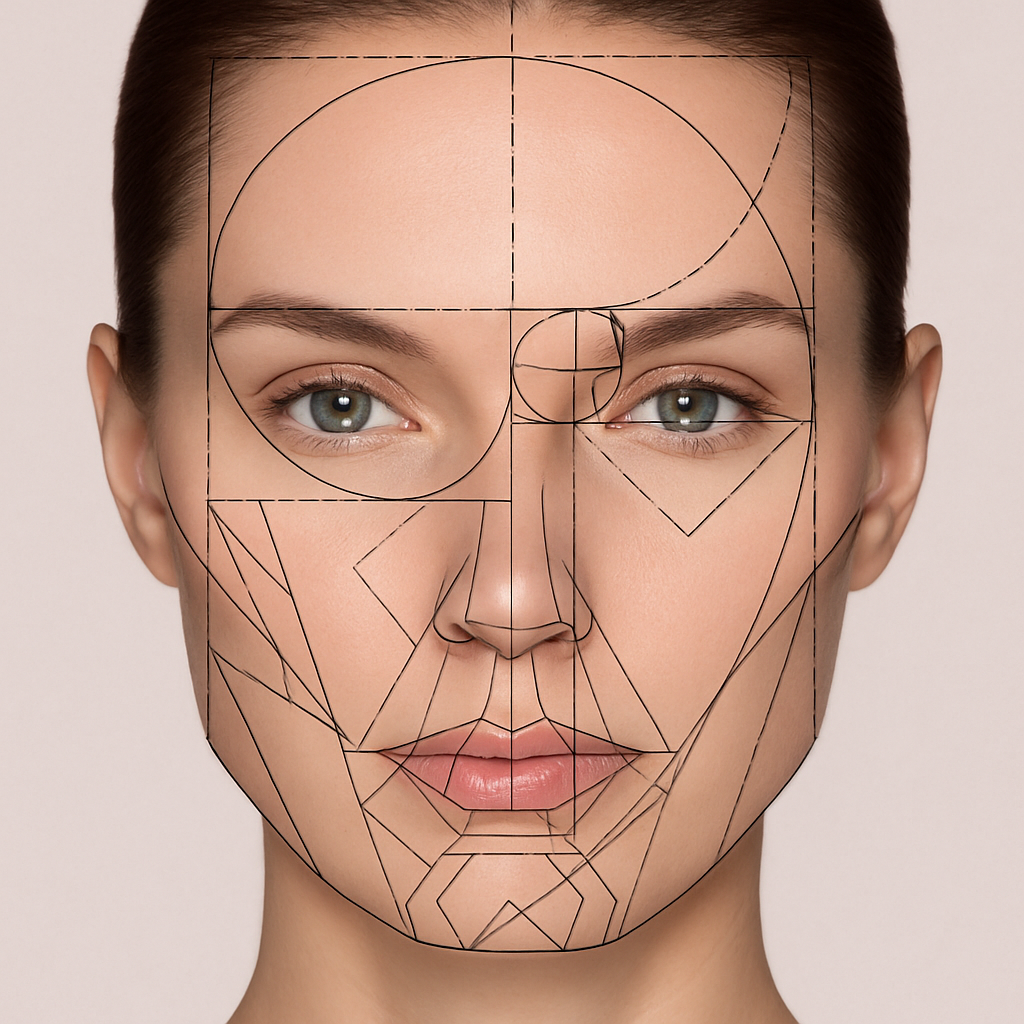
The concept of the Golden Ratio (approximately 1.618, or Phi) has been popularized as a universal standard for facial beauty and symmetry. 🌟
While the ratio appears in nature and art, its direct application as a definitive measure of facial attractiveness is largely a pseudoscience. 😔
Studies attempting to correlate facial measurements that conform to the Golden Ratio with perceived attractiveness have yielded inconsistent results. 🤷
The human perception of beauty is far more complex, involving factors like averageness, youthfulness, and dynamic expression, not just static proportions. 🎭
Therefore, while the Golden Ratio can be a fun tool for superficial analysis, it is not the best or most accurate way to measure true facial symmetry. ❌
Clinical Applications: From Diagnosis to Treatment 🩺
Accurate quantification of facial asymmetry is essential in several clinical fields. 🏥
It allows practitioners to distinguish between normal, non-pathological asymmetry and clinically significant asymmetry that requires intervention. 🎯
Orthodontics and Maxillofacial Surgery 🔪
In orthodontics, 3D analysis helps diagnose conditions like mandibular deviation or hemifacial microsomia, where one side of the face is underdeveloped. 🧐
For maxillofacial surgeons, the color-difference maps generated by 3D scanning are invaluable for surgical planning. 🗺️
They allow the surgeon to precisely visualize the areas that need augmentation or reduction to achieve the desired level of symmetry. 💉
Post-treatment, the same technology is used to objectively measure the success of the intervention. ✅
The Role of AI and Deep Learning 🤖
The future of facial symmetry measurement is moving toward automation through Artificial Intelligence (AI) and deep learning. 🤖
AI models are being trained on vast datasets of 2D and 3D images to automatically score facial symmetry with high accuracy. [4]
These systems can quickly identify subtle patterns of asymmetry that might be missed by the human eye, potentially making accurate measurement more accessible and standardized. 🌟
Conclusion: Embracing the Imperfect Balance ⚖️
The best way to measure facial symmetry accurately is through quantitative 3D surface analysis, which provides an objective, millimeter-level assessment of facial balance. 🎯
While the pursuit of perfect symmetry is a biological and aesthetic drive, it is important to remember that a small degree of asymmetry is normal and often contributes to the unique character of a face. 💖
Accurate measurement is a tool for understanding, not a judgment of beauty. 🤓
By using these advanced methods, clinicians can provide personalized, evidence-based treatments to correct significant asymmetries and enhance overall facial harmony. 🤝
Further Exploration and Resources 📚
To explore the science of facial symmetry and its measurement, consult these authoritative resources: 🔬
Three-dimensional quantification of facial symmetry in adolescents using laser surface scanning
Quantitative analysis of facial symmetry by using three-dimensional stereophotogrammetry
Quantification of facial asymmetry by 2D analysis
Deep learning-based automatic facial symmetry scoring in 2D photographs
Visual Guides to Symmetry Analysis 🎥
For visual demonstrations of the techniques discussed, these videos offer valuable insights: 📺
Embrace your unique balance! 💖