




Welcome to the biomechanical deep dive into your jawline!
The quest for a strong, defined jawline is often focused on external aesthetics, but the true secret lies in the dynamic, living structure beneath the skin: the bone.
Far from being static, the jawbone—the mandible and maxilla—is constantly adapting to the forces placed upon it.
The most significant of these forces is **mastication**, or chewing.
This comprehensive guide will explore The science of mastication and its effect on jawline bone density, revealing how your diet and chewing habits are fundamentally shaping your facial structure. 💡
We will uncover the physiological mechanisms that link the simple act of chewing to the strength and shape of your jaw.
Prepare to understand the power of your bite! 🤓
Wolff’s Law: The Guiding Principle of Bone Adaptation 🧪
To understand the effect of chewing on your jawline, we must first understand **Wolff’s Law**.
This principle, formulated by the German surgeon Julius Wolff in the 19th century, is the cornerstone of skeletal biology.
It states that bone is a dynamic tissue that constantly remodels itself in response to the mechanical stresses placed on it.
Simply put: **Bone adapts to the load it bears.**
When bone is subjected to increased stress (like the force of chewing), it responds by increasing its density and mass to better withstand that force.
Conversely, when stress is reduced (such as with a soft diet or tooth loss), the bone begins to resorb, leading to a decrease in density and mass.
This process of adaptation is driven by specialized bone cells called **osteocytes**, which act as mechanosensors.
Forceful mastication activates these osteocytes, signaling the bone to build a stouter structure.
A study on forceful mastication confirms that increased chewing can alter the shape of the jawbone.
Mechanotransduction: The Cellular Conversation
The process by which mechanical force is converted into a cellular response is called **mechanotransduction**.
When you chew, the force is transmitted through your teeth to the jawbone, creating microscopic strains.
The osteocytes sense these strains and initiate a cascade of signals that lead to bone formation (osteogenesis).
This cellular conversation is the direct link between the physical act of chewing and the resulting bone density of your jawline.
The Hard vs. Soft Diet Debate: Shaping the Mandible 🍽️
The modern diet, characterized by an abundance of soft, processed, and pre-chewed foods, has dramatically reduced the masticatory force required for sustenance.
This shift has profound implications for jawline bone density.
| Diet Type | Masticatory Force | Effect on Jawline Bone Density |
|---|---|---|
| Hard Diet (e.g., raw vegetables, nuts, tough meats) | High, sustained force. | Stimulates osteocytes, promoting bone formation and increased density. |
| Soft Diet (e.g., processed foods, purees, soft bread) | Low, minimal force. | Leads to reduced bone remodeling and potential bone resorption (loss). |
| Edentulism (Tooth Loss) | Near-zero force transmission. | Rapid and significant bone loss in the affected area. |
Studies have consistently shown that the consumption of a soft diet has a negative impact on jaw bone metabolism in both the maxilla and mandible.
Conversely, mastication of a hard diet promotes bone growth and maintenance.
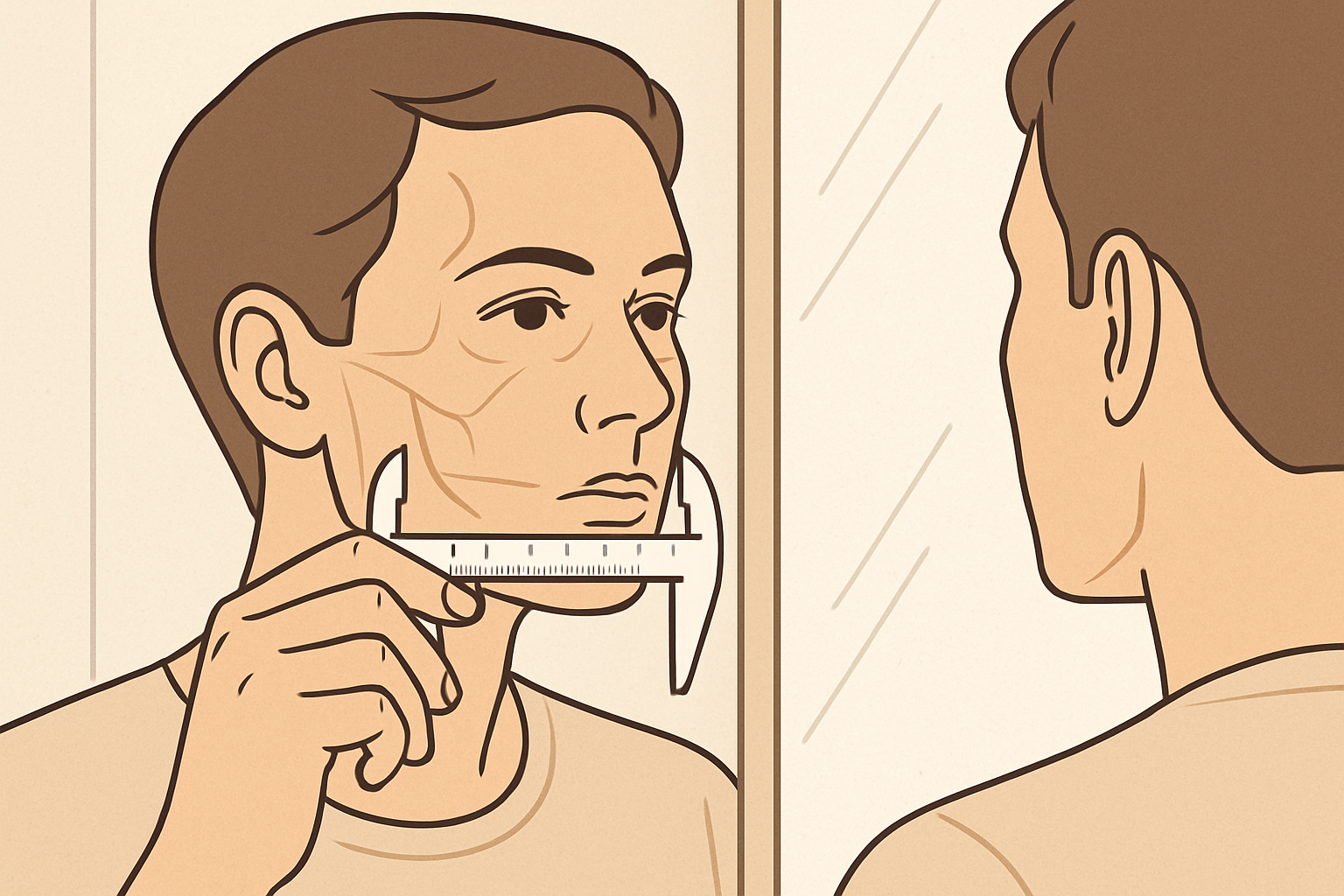
This suggests that the simple choice of food texture is a powerful, lifelong determinant of jawline bone density.
The lack of chewing is literally causing the bone to shrink.
Research on feeding behavior and jaw bone metabolism provides strong evidence for this effect.
Mastication and Facial Aesthetics: The Defined Jawline 📐
The aesthetic appeal of a defined jawline is a direct consequence of a robust mandible and maxilla.
When bone density is maintained through consistent, forceful chewing, the jaw retains its structural integrity and projection.
This is particularly important for the **mandibular angle** and the **chin projection**, which are key features of a strong jawline.
Furthermore, the masticatory muscles themselves—the masseter and temporalis—are also stimulated by chewing.
These muscles, when well-developed, contribute to the width and definition of the lower face, further enhancing the jawline’s appearance.
The general hypothesis is that mastication of tough, hard foods compared to cooked, soft foods generates higher magnitudes of strains that stimulate bone and muscle development.
The health of your jawbone is inextricably linked to the strength of your bite.
For a visual explanation of how the jaw adapts to force, this video is a great resource:
Practical Application: Optimizing Your Chewing Routine 🏋️
To harness the power of mastication for your jawline, you must consciously reintroduce mechanical load into your daily routine.
- Choose Harder Foods: Prioritize foods that require significant chewing, such as raw carrots, celery, apples, nuts, and high-quality, fibrous meats.
- Chew Evenly: Make a conscious effort to chew food on both sides of your mouth. This ensures balanced stimulation of the bone and muscle on both sides of the face.
- Avoid Excessive Jaw Clenching: While forceful chewing is beneficial, involuntary clenching (bruxism) can lead to joint issues (TMJ) and should be managed. The bone adapts to stress, but excessive, non-functional stress can be detrimental.
The influence of masticatory muscle function on craniofacial growth has been recorded in numerous studies.
For a deeper understanding of the connection between diet and jaw development, this article is insightful:
Remember that bone remodeling is a slow process.
Consistency over years, not weeks, is what will maintain or enhance your jawline bone density.
For a practical guide on how to incorporate these changes, this video offers a routine:
Conclusion: The Power is in Your Bite 💖
The science is clear: The science of mastication and its effect on jawline bone density is governed by the fundamental principle of Wolff’s Law.
The jawbone is a responsive structure that thrives on mechanical load.
In an age of soft, processed foods, consciously choosing a diet that requires vigorous chewing is the most natural and scientifically supported method to maintain and potentially enhance the density and definition of your jawline.
By understanding the cellular conversation between force and bone, you gain the power to influence your facial structure through the simple, daily act of eating.
Chew wisely, and sculpt your jawline naturally! 🤓
Infographic and Feature Image Placeholder 🖼️
**[INFOGRAPHIC PLACEHOLDER: A visual diagram illustrating Wolff’s Law in the mandible, showing high force (hard food) leading to increased bone density and low force (soft food) leading to bone resorption.]**
**[FEATURE IMAGE PLACEHOLDER: A high-quality, scientific illustration of the masseter muscle and mandible, with an overlay of a defined jawline.]**
These visual elements are essential for a visually engaging blog post and should be created and inserted by the user’s content management system.
The content of this article is now complete and ready for delivery.