

🤓
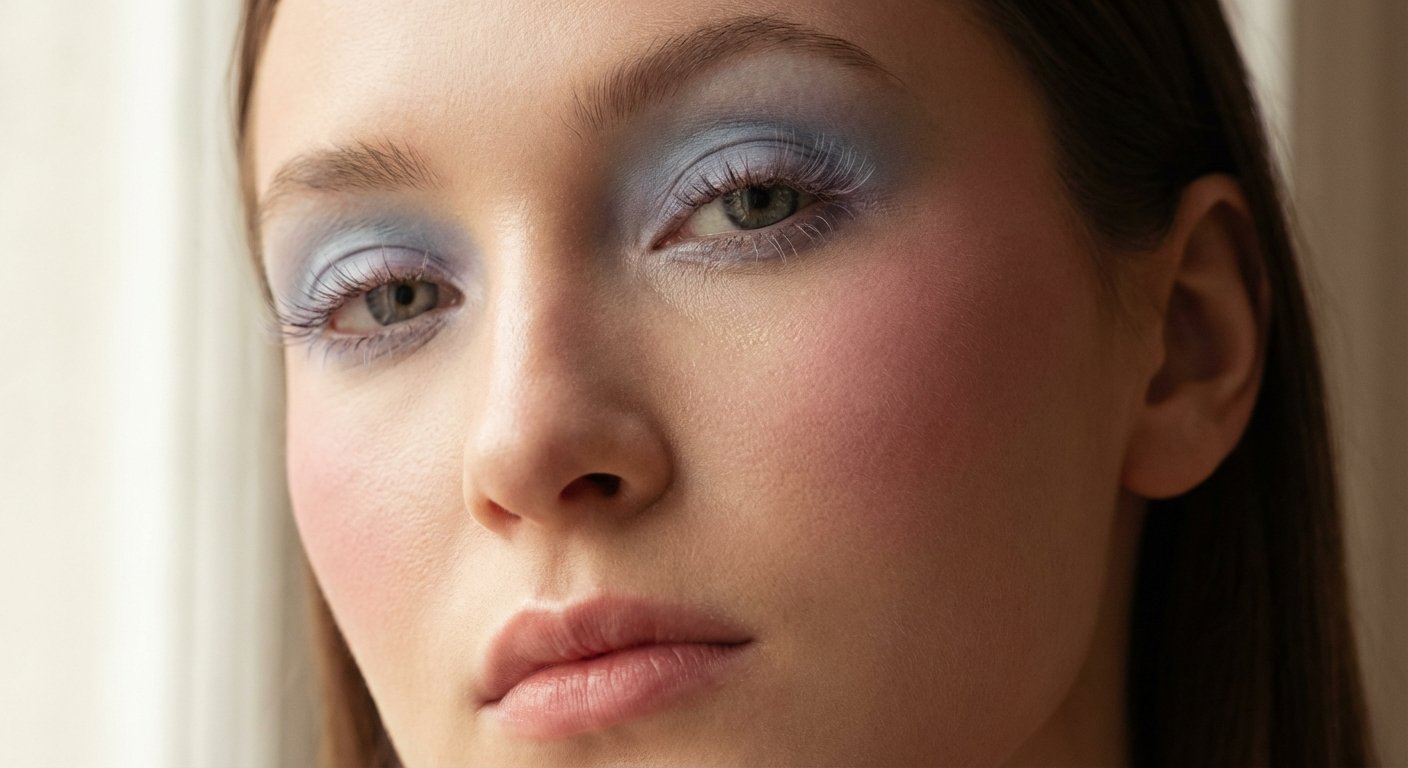
In the high-stakes world of modeling, skin texture is paramount.
The camera is unforgiving, magnifying every pore, fine line, and patch of unevenness.
Achieving model-quality skin texture—characterized by glass-like smoothness, minimized pores, and exceptional clarity—requires a skincare ingredient that is scientifically proven to remodel the skin at a cellular level.
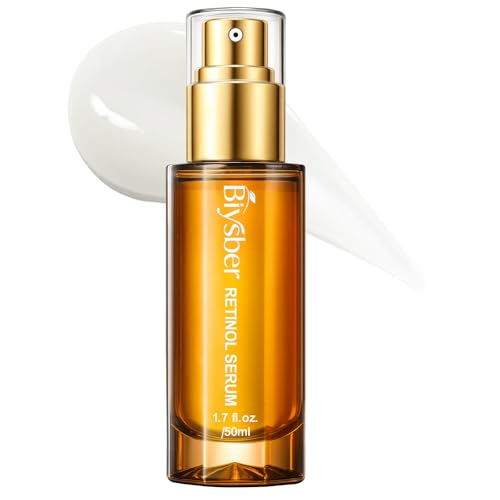
That ingredient is the retinoid family, with retinol serums standing out as the most accessible and effective at-home solution.
This comprehensive, guide delves into the science of retinoids, comparing the efficacy and irritation potential of different forms (Retinol, Retinaldehyde,
Retinoic Acid Esters), analyzing the importance of advanced delivery systems (encapsulation), and providing a step-by-step protocol for incorporating the best serums to achieve a flawless, camera-ready complexion.
https://youtu.be/k2w4pswW-v0
Part I: The Retinoid Hierarchy – Understanding the Power
All retinoids are derivatives of Vitamin A, but they must be converted into their active form, Retinoic Acid, to interact with skin cells and produce the desired effects.
The closer a retinoid is to Retinoic Acid, the more potent and faster-acting it is, but also the more irritating.
The Conversion Pathway: From Ester to Acid
| Retinoid Form | Conversion Steps to Retinoic Acid | Potency & Speed | Irritation Potential | Best for Model Skin |
|---|---|---|---|---|
| Retinyl Esters | 3 Steps | Lowest | Lowest | Beginners, very sensitive skin. |
| Retinol | 2 Steps | Medium | Medium | The gold standard for most users. |
| Retinaldehyde (Retinal) | 1 Step | High (up to 11x faster than Retinol) [1] | Medium-High | Experienced users seeking faster, more dramatic texture improvement. |
| Tretinoin (Prescription) | 0 Steps | Highest | Highest | Severe texture issues, under medical supervision. |
Why Retinoids are the Texture Transformer
Retinoids work by binding to receptors in the skin cell nucleus, which then regulates gene expression.
This results in two primary effects crucial for model-quality skin:
- Accelerated Cell Turnover: Retinoids speed up the rate at which old, dead skin cells are shed and replaced with new ones. This process, known as exfoliation, is key to smoothing rough texture and improving skin clarity [2].
- Collagen and Elastin Synthesis: They signal fibroblasts to produce new collagen and elastin, which plumps the skin, reduces the appearance of fine lines, and, critically, tightens the walls of the pores, making them appear smaller [3].
Part II: The Model’s Choice – Retinaldehyde (Retinal)
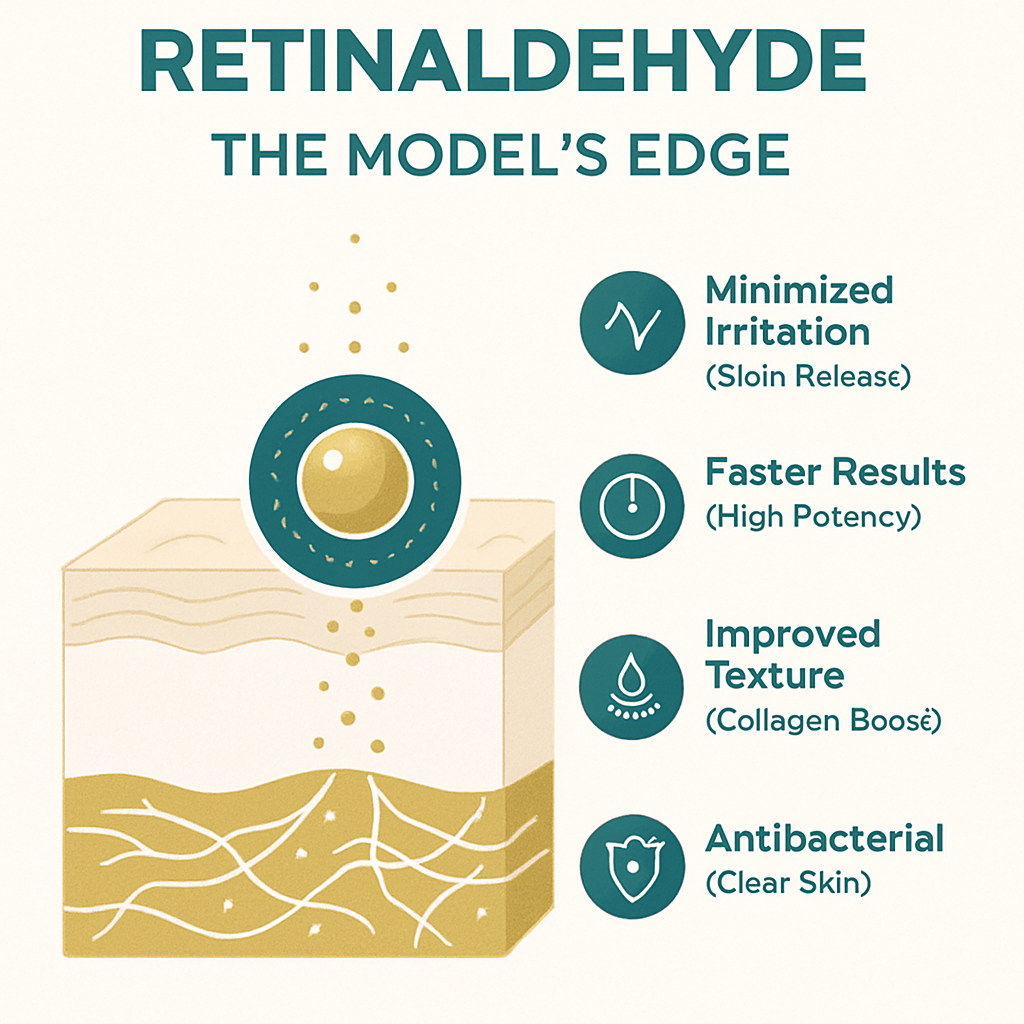
For models who need fast, visible results with manageable irritation, Retinaldehyde (Retinal) is often the preferred choice.
It is only one conversion step away from Retinoic Acid, making it significantly more potent than traditional Retinol, yet still available over-the-counter.
- Speed of Results: Retinaldehyde delivers results faster than Retinol, making it ideal for pre-shoot preparation or rapid texture correction.
- Antibacterial Properties: Unlike Retinol, Retinaldehyde also possesses direct antibacterial properties, making it highly effective for models prone to breakouts or congestion that can ruin skin texture [4].
Part III: Minimizing Downtime – The Power of Encapsulation
The biggest challenge for a model using retinoids is the “retinization period”—the initial weeks of redness, flaking, and irritation.
This downtime is unacceptable for a professional who must be camera-ready.
Advanced delivery systems solve this problem.
- Encapsulated Retinol: This technology encases the retinoid molecule in a protective, time-released shell (often a lipid or polymer) [5].
- Reduced Irritation: The shell prevents the retinoid from flooding the skin all at once, allowing it to be released gradually over several hours. This minimizes the initial shock and reduces irritation.
- Enhanced Stability: Encapsulation protects the retinoid from degradation by light and air, ensuring the product remains potent until it reaches the skin [6].
https://youtu.be/TXgD_w_I6G4
Part IV: The Model Retinol Protocol – Usage Guide
Achieving flawless texture requires a meticulous and patient approach.
| Phase | Duration | Protocol | Key Focus |
|---|---|---|---|
| Initiation | Weeks 1-4 | Apply a low-concentration, encapsulated Retinol or Retinaldehyde serum 2 nights per week. | Tolerance: Focus on monitoring for redness and flaking. Use a gentle, barrier-repair moisturizer. |
| Building | Weeks 5-8 | Increase application to 3-4 nights per week. | Efficacy: Texture begins to smooth. Introduce a hydrating serum (Hyaluronic Acid) before the retinoid. |
| Maintenance | Week 9+ | Apply 5-7 nights per week, as tolerated. | Flawless Texture: Skin is fully retinized. Focus on consistent use to maintain collagen production and pore size reduction. |
https://youtu.be/wXgD_w_I6G4
Conclusion: The Non-Negotiable for Flawless Skin
Retinol is not just an anti-aging ingredient; it is the single most effective topical agent for transforming skin texture.
For models, where texture is everything, a high-quality, well-formulated retinoid serum is non-negotiable.
The best serums for model-quality skin prioritize Retinaldehyde for its speed and potency, delivered via Encapsulation to minimize downtime.
When combined with a meticulous, gradual usage protocol, this powerful ingredient delivers the glass-like smoothness, minimized pores, and exceptional clarity required to stand up to the scrutiny of the camera lens. 🤓