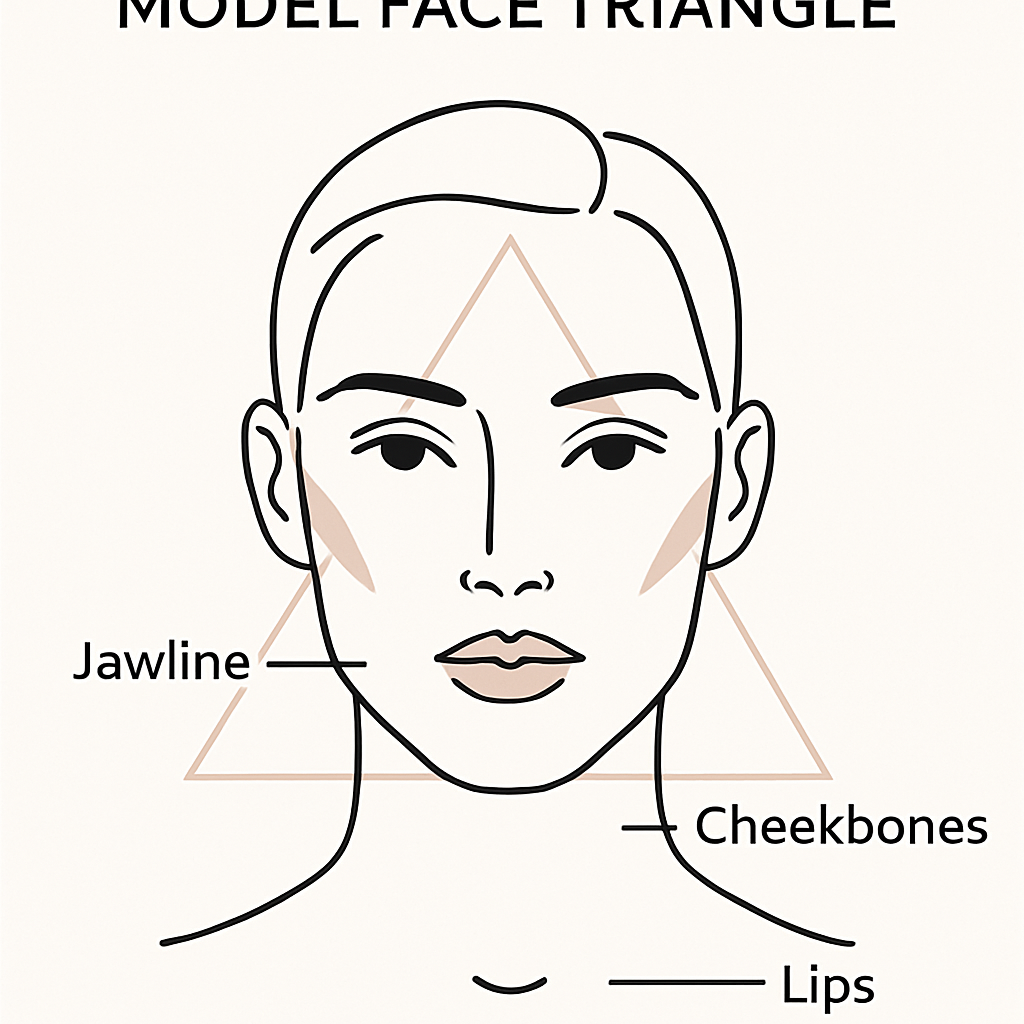



Face symmetry
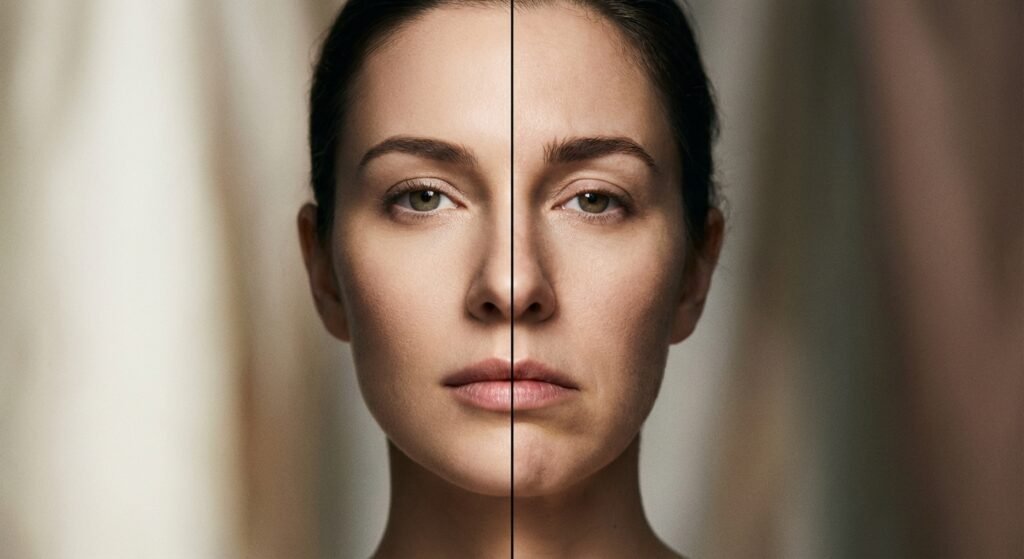
Have you ever looked in the mirror and noticed that one side of your face seems just a little different from the other? 🧐
Perhaps one eyebrow sits slightly higher, or one side of your smile is a bit more expressive.
You’re not imagining it, and you’re certainly not alone.
Facial asymmetry is a natural part of being human.
In fact, perfect symmetry is incredibly rare.
But have you ever stopped to wonder where these subtle (and sometimes not-so-subtle) differences come from?
While genetics and aging certainly play a role, there’s a much deeper, more intricate story unfolding beneath the surface—a story that connects the alignment of your entire body to the symmetry of your face.
It’s a fascinating and often overlooked connection that has profound implications for how we understand beauty, health, and the intricate workings of our own bodies.
The Illusion of Perfect Symmetry
For centuries, facial symmetry has been hailed as a hallmark of beauty and attractiveness.
Our brains are naturally drawn to balanced features, associating them with health, youth, and vitality.
But the truth is, the concept of a perfectly symmetrical face is more of a myth than a reality.
Every single person has some degree of asymmetry.
These minor variations are part of what makes each of us unique and are often completely unnoticeable to the casual observer.
However, when these imbalances become more pronounced, they can begin to affect not only our appearance but also our self-confidence.
It’s at this point that many people start to seek out solutions, often focusing solely on the face itself.
But what if the root of the issue isn’t in your face at all? What if it’s in your hips, your shoulders, or the way you carry yourself every single day?
https://youtube.com/watch?v=n_63sO9LaD4
The Body’s Blueprint: How Posture Shapes Your Face
Think of your body as a complex architectural structure.
Your spine is the central pillar, and your pelvis is the foundation.
If the foundation is tilted or the pillar is curved, it’s only a matter of time before the effects are seen in the upper levels of the structure—in this case, your face.
This is where the concept of postural asymmetry comes into play.
Many of us have developed habitual postural imbalances over the years, often without even realizing it.
Check out our Model Face collection Amazon products
Do you consistently carry your bag on the same shoulder?
Do you lean to one side when you’re sitting at your desk?
These seemingly insignificant habits can create a chain reaction of muscular imbalances that travel all the way up your body.
For example, if you have a slight tilt in your pelvis, your body might compensate by curving your spine to keep your head level.
This, in turn, can lead to chronic tension in the muscles of your neck and shoulders on one side.
And since your facial muscles are intricately connected to the muscles of your neck and scalp, this tension can begin to pull on your facial features, creating a subtle but noticeable asymmetry.
The Telltale Signs of Postural Imbalance
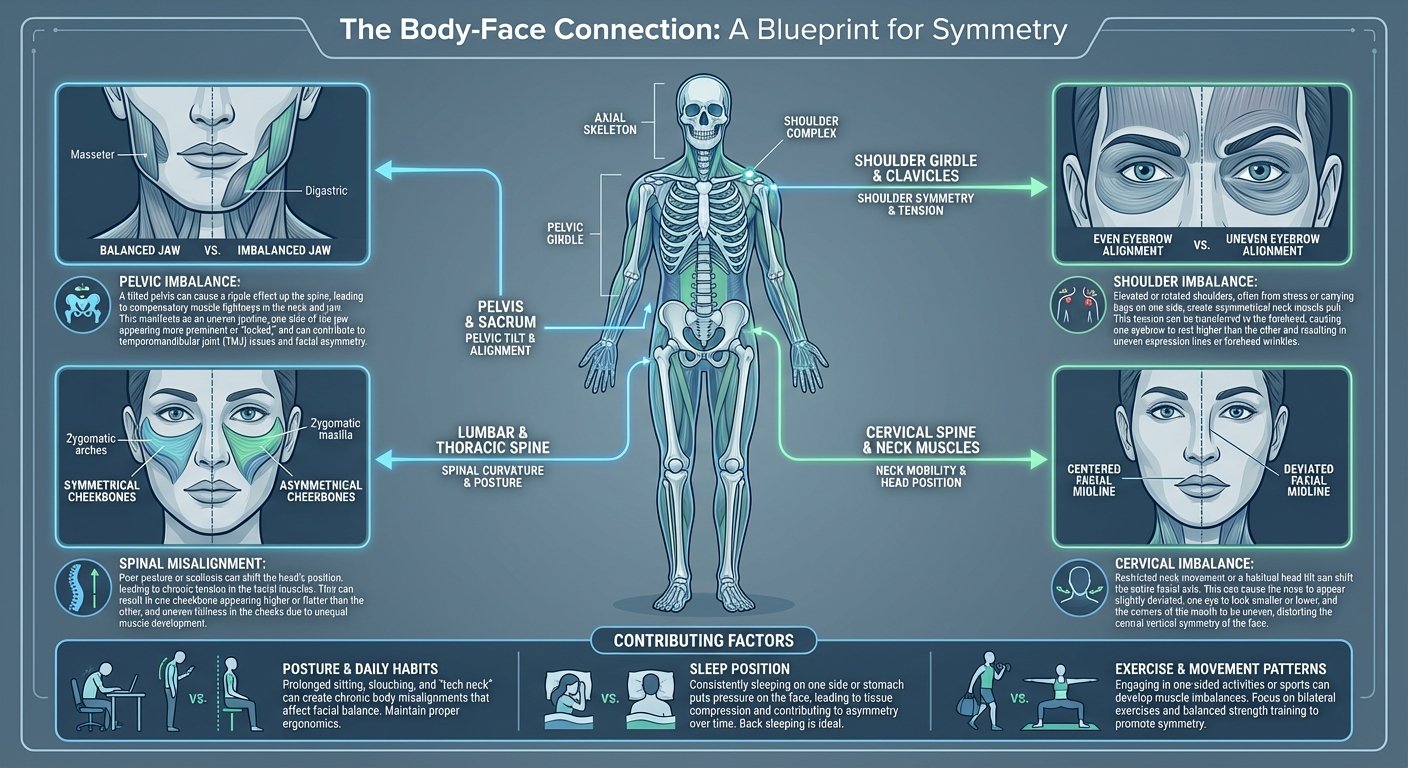
How can you tell if your body’s alignment might be affecting your face? Here are a few things to look out for:
- Uneven Shoulders: Stand in front of a mirror and see if one of your shoulders sits higher than the other.
- Head Tilt: Do you often find yourself tilting your head to one side in photos?
- Jaw Deviation: When you open and close your mouth, does your jaw move straight up and down, or does it deviate to one side?
- Chronic Pain: Do you experience persistent pain or tension in one side of your neck, shoulders, or back?
If you answered yes to any of these questions, it’s a strong indication that you may have some underlying postural imbalances that could be contributing to your facial asymmetry.
https://youtube.com/watch?v=d38_e5c26uc
Lifestyle Habits: The Silent Sculptors of Your Face
Beyond your overall posture, there are a number of other daily habits that can have a significant impact on the symmetry of your face.
These are the small, repetitive actions that you probably don’t even think twice about, but over time, they can add up to create noticeable imbalances.
| Habit | Effect on Facial Symmetry |
|---|---|
| Sleeping on One Side | Consistently sleeping on the same side of your face can lead to the compression of facial tissues and a gradual shifting of features over time. |
| Chewing on One Side | Favoring one side of your mouth when you chew can lead to the overdevelopment of the masseter (jaw) muscle on that side, creating a fuller, more prominent appearance. |
| Resting Your Head on Your Hand | This common habit can put sustained pressure on one side of your face, potentially leading to a subtle shifting of the soft tissues. |
| Dental Issues | An uneven bite or missing teeth can cause you to unconsciously favor one side of your jaw, leading to muscular imbalances and facial asymmetry. |
It’s important to remember that these habits are not going to cause dramatic changes overnight.
Rather, their effects are cumulative, gradually shaping your facial features over the course of months and even years.
“The face is a mirror of the mind, and eyes without speaking confess the secrets of the heart.” – St. Jerome
The good news is that by becoming more mindful of these habits, you can begin to counteract their effects and promote a more balanced, symmetrical appearance.
The Aging Factor: How Time Exacerbates Asymmetry
As we get older, it’s natural for our faces to change.
We lose collagen and elastin, our facial fat pads begin to shrink and shift, and our bones may even undergo subtle changes.
Unfortunately, these age-related changes are rarely symmetrical.
A 2018 study published in the journal *Plastic and Reconstructive Surgery* found that facial asymmetry increases with age, particularly in the lower two-thirds of the face.
This is where the effects of our lifelong habits and postural imbalances can really become apparent.
If you’ve spent years sleeping on your right side, for example, you may notice that the signs of aging—such as wrinkles and sagging skin—are more pronounced on that side of your face as you get older.
Similarly, if you have a long-standing postural issue that has caused chronic tension in the left side of your neck, you may find that your left jowl is more prominent than your right.
The Sun’s Skewed Impact
Another factor to consider is sun exposure.
Unless you’re a professional driver or spend a lot of time with one side of your face exposed to the sun, you might assume that your sun damage is relatively even.
However, studies have shown that even everyday activities, like driving to work, can lead to asymmetrical sun damage.
In countries where the driver’s seat is on the left side of the car, people tend to have more sun damage on the left side of their faces.
This can manifest as more wrinkles, sunspots, and a loss of skin elasticity on the more exposed side.
https://youtube.com/watch?v=FAciA__-YgI
Taking Action: Your Path to a More Symmetrical You
Now that you understand the deep connection between your body and your face, you’re probably wondering what you can do about it.
The good news is that there are a number of steps you can take to address your asymmetry and promote a more balanced appearance.
It’s important to remember that the goal is not to achieve perfect symmetry, but rather to create a sense of harmony and balance that makes you feel confident and beautiful.
Here are a few strategies to get you started:
Check out our Model Face collection Amazon products
1. Focus on Your Foundation: Postural Correction
Since your posture is the foundation of your body’s alignment, this is the best place to start.
Consider consulting with a physical therapist, chiropractor, or a qualified posture specialist who can assess your alignment and identify any underlying imbalances.
They can provide you with a personalized program of exercises and stretches to help you correct your posture and release chronic tension.
“The body is a self-healing organism, so it’s really about clearing things out of the way so the body can heal itself.” – Barbara Brennan
Activities like yoga, Pilates, and the Alexander Technique can also be incredibly beneficial for improving your posture and body awareness.
2. Cultivate Mindful Habits
The next step is to become more mindful of the small, everyday habits that may be contributing to your asymmetry.
Make a conscious effort to:
- Switch up your sleeping position: If you’re a side sleeper, try to alternate sides or sleep on your back. A silk pillowcase can also help to reduce friction on your skin.
- Chew on both sides of your mouth: This may feel strange at first, but with practice, you can retrain your jaw muscles to work more evenly.
- Be mindful of your seated posture: Avoid crossing your legs and make sure your computer screen is at eye level to prevent you from tilting your head.
- Protect your skin from the sun: Wear a broad-spectrum sunscreen every day, even when you’re in the car.
3. Explore Facial Exercises and Massage
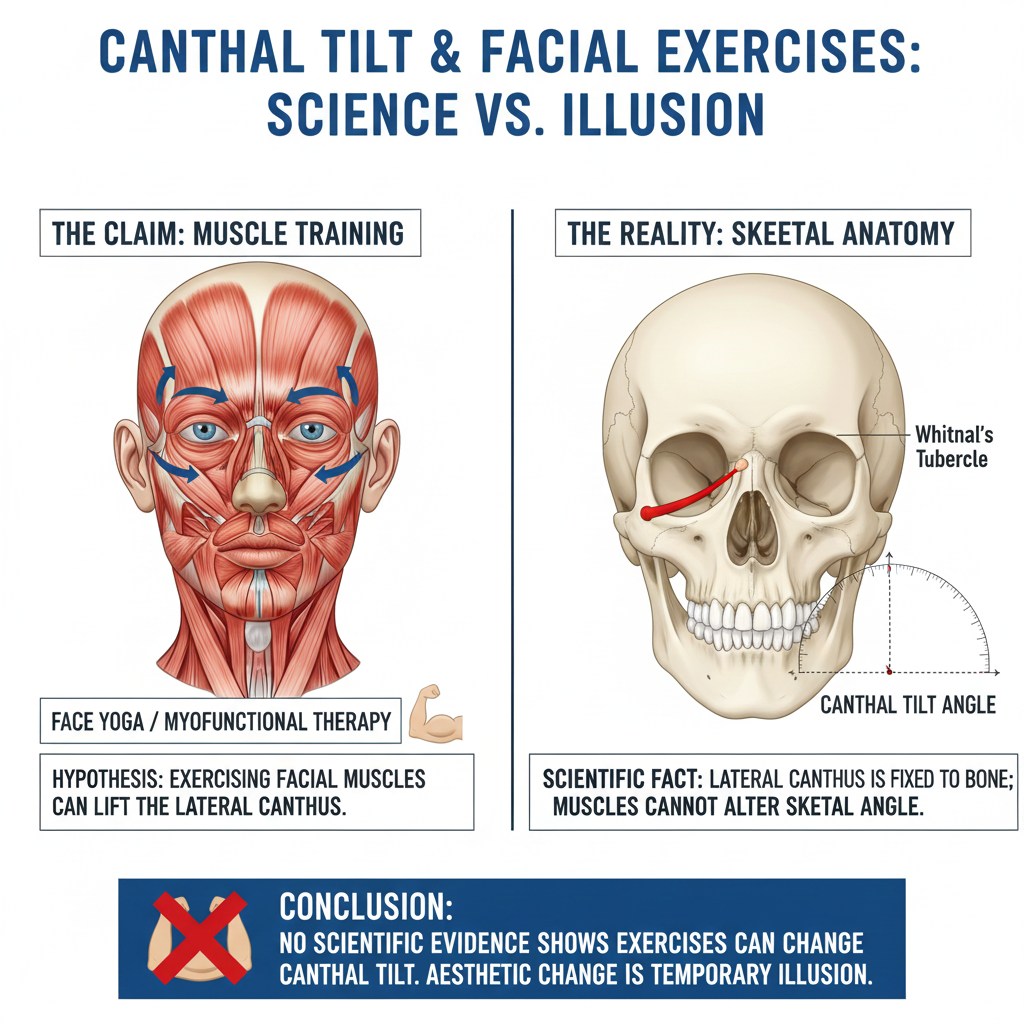
Just like the muscles in your body, your facial muscles can be trained and toned.
Facial exercises, often referred to as “face yoga,” can help to strengthen underdeveloped muscles and release tension in overused ones.
There are a number of great resources online and in books that can guide you through specific exercises for different areas of your face.
Facial massage, either with your hands or with a tool like a gua sha stone or a jade roller, can also be beneficial.
Massage can help to improve circulation, release tension, and promote lymphatic drainage, which can reduce puffiness and create a more sculpted, symmetrical appearance.
The Bigger Picture: Embracing Your Unique Beauty
As you embark on this journey to a more symmetrical you, it’s important to keep things in perspective.
Your facial asymmetry is a part of your unique story.
It’s a reflection of your life, your habits, and the way you’ve moved through the world.
Rather than striving for an unrealistic ideal of perfect symmetry, focus on creating a sense of balance and harmony that makes you feel your best.
By addressing the root causes of your asymmetry in your body, you’re not just improving your appearance—you’re investing in your overall health and well-being.
And that’s a beautiful thing, no matter which way you look at it. 😉
External Links:
MedicalNewsToday on Asymmetrical Faces
Healthline: What Causes an Asymmetrical Face?
Facial Asymmetry: A Current Review (NIH)
ScienceDaily: Facial Asymmetry Increases with Age
🔍 Explore More: See all guides for how body asymmetry affect the face .
Check out our Model Face collection Amazon products