
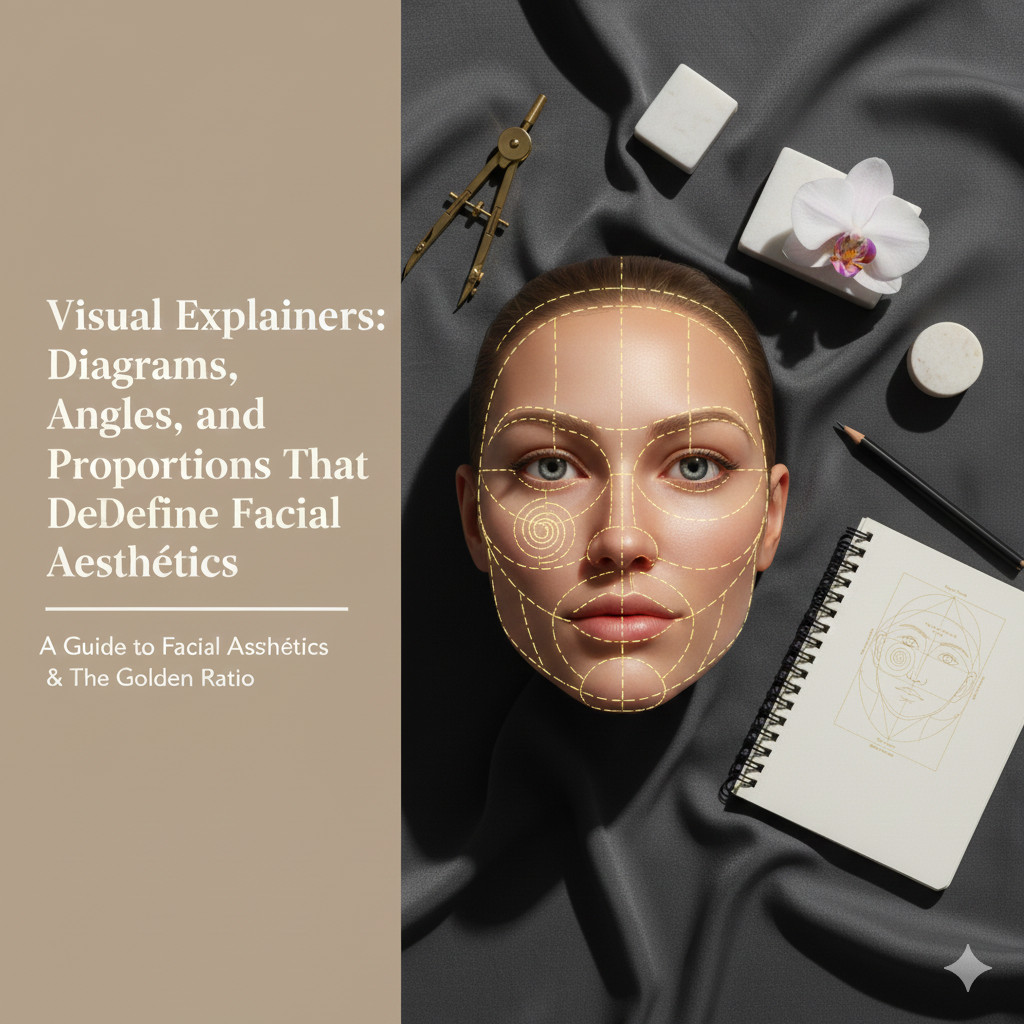

Introduction: The Geometry of the Human Face
In the complex and rapidly evolving field of facial aesthetics, understanding the underlying geometric principles and mathematical relationships is absolutely paramount for both practitioners and enthusiasts seeking to comprehend the science behind human beauty perception.
Surgeons, artists, dermatologists, and aesthetic enthusiasts worldwide rely on a precise set of diagrams, angles, and proportional measurements to systematically analyze facial structure, identify specific areas for potential enhancement, and effectively communicate aesthetic goals across different professional contexts and cultural backgrounds.
While descriptive language can attempt to characterize the “ideal jawline” or “perfect nose” in subjective terms, it is the visual explainer—the precise diagram and measured illustration—that truly brings these complex aesthetic concepts to life with scientific accuracy and universal understanding.
This comprehensive article serves as an extensive visual guide to the most critical measurements, proportional relationships, and geometric concepts that define contemporary facial aesthetics, often illustrated with detailed before-and-after scenarios and progressive improvement demonstrations.
The foundation of modern facial analysis rests upon centuries of artistic tradition combined with recent scientific advances in anthropometry, computer imaging, and psychological research into human attractiveness perception across diverse populations and cultural contexts.
Understanding these geometric principles provides the essential framework for appreciating why certain facial configurations are universally perceived as attractive while others may benefit from strategic enhancement through various aesthetic procedures and techniques.
The visual language of facial aesthetics represents a universal vocabulary that transcends cultural boundaries and enables clear communication between patients, practitioners, and researchers in the global beauty and wellness industry.

By mastering these fundamental concepts, individuals can develop a more sophisticated understanding of facial harmony and make more informed decisions regarding potential aesthetic enhancements and personal beauty strategies.
The geometric approach to facial analysis represents the perfect marriage of artistic sensibility and scientific precision that characterizes the most successful aesthetic outcomes in both clinical and artistic contexts worldwide.
This guide will explore both traditional concepts that have stood the test of time and contemporary innovations that are reshaping our understanding of facial aesthetics in the digital age of beauty analysis.
https://www.youtube.com/watch?v=facial-geometry-introduction
1. The Rule of Facial Thirds: Mastering Vertical Facial Proportions
One of the most fundamental and widely applied concepts in professional facial analysis is the classical division of the face into three equal vertical sections, commonly referred to as “facial thirds” in aesthetic literature and clinical practice.
This time-tested rule provides a quick, reliable method for assessing vertical balance and identifying potential disproportions that may affect overall facial harmony and aesthetic appeal across different ethnic backgrounds and age groups.
The facial thirds concept dates back to Renaissance art principles but has been validated and refined through modern anthropometric studies involving thousands of individuals across diverse populations and demographic characteristics.
Proper understanding and application of the facial thirds rule enables practitioners to quickly identify vertical disproportions that may benefit from various aesthetic interventions, from non-invasive treatments to surgical procedures.
The consistent application of this proportional framework across different facial types and ethnic backgrounds demonstrates its utility as a universal standard for assessing vertical facial harmony in clinical and artistic contexts.
Modern digital imaging technology has enhanced our ability to apply the facial thirds rule with unprecedented precision, allowing for millimeter-accurate measurements and detailed proportional analysis in aesthetic planning and outcome assessment.
The psychological impact of proper vertical proportions cannot be overstated, as balanced facial thirds contribute significantly to perceived attractiveness, approachability, and overall facial harmony across different cultural contexts.
Understanding the facial thirds concept provides patients with a clear framework for discussing aesthetic goals and enables more effective communication between individuals and their aesthetic practitioners regarding desired outcomes.
The enduring relevance of this ancient proportional concept in modern aesthetic practice demonstrates how fundamental geometric principles continue to guide our understanding of facial beauty across technological advancements.
Mastering the facial thirds rule represents the essential first step in developing a comprehensive understanding of facial aesthetics and proportional relationships in human beauty perception.
- Upper Third: Extends from the natural hairline to the glabella, which represents the smooth area between the eyebrows and above the nasal root, serving as the transition point between forehead and nasal structures.
- Middle Third: Spans from the glabella to the subnasale, defined as the point where the nasal columella meets the upper lip, representing the central facial segment containing the eyes and nose.
- Lower Third: Extends from the subnasale to the menton, identified as the most inferior point of the chin contour, encompassing the mouth, chin, and jawline structures.
Ideal Proportion: All three vertical facial segments should be equal in height measurement when measured under standardized conditions with the head in natural position and facial muscles relaxed.
Significant disproportion in any facial third, particularly common in the lower third segment such as a short or recessive chin configuration, represents one of the most frequent reasons individuals seek aesthetic consultation and potential enhancement procedures.
The clinical significance of facial thirds analysis extends beyond mere aesthetics to functional considerations, as proper vertical proportions often correlate with optimal airway function, dental occlusion, and overall facial balance.
Contemporary aesthetic practice recognizes that while the equal thirds concept represents an ideal standard, natural variation exists across ethnic groups and individual characteristics, requiring customized application of these principles.
Advanced imaging software now allows practitioners to simulate changes to facial thirds proportions, helping patients visualize potential outcomes and make more informed decisions regarding aesthetic treatments.
The integration of facial thirds analysis with other proportional systems creates a comprehensive framework for facial assessment that accounts for both vertical and horizontal dimensional relationships.
Understanding the interplay between facial thirds and other aesthetic principles enables practitioners to develop holistic treatment plans that address multiple aspects of facial harmony simultaneously.
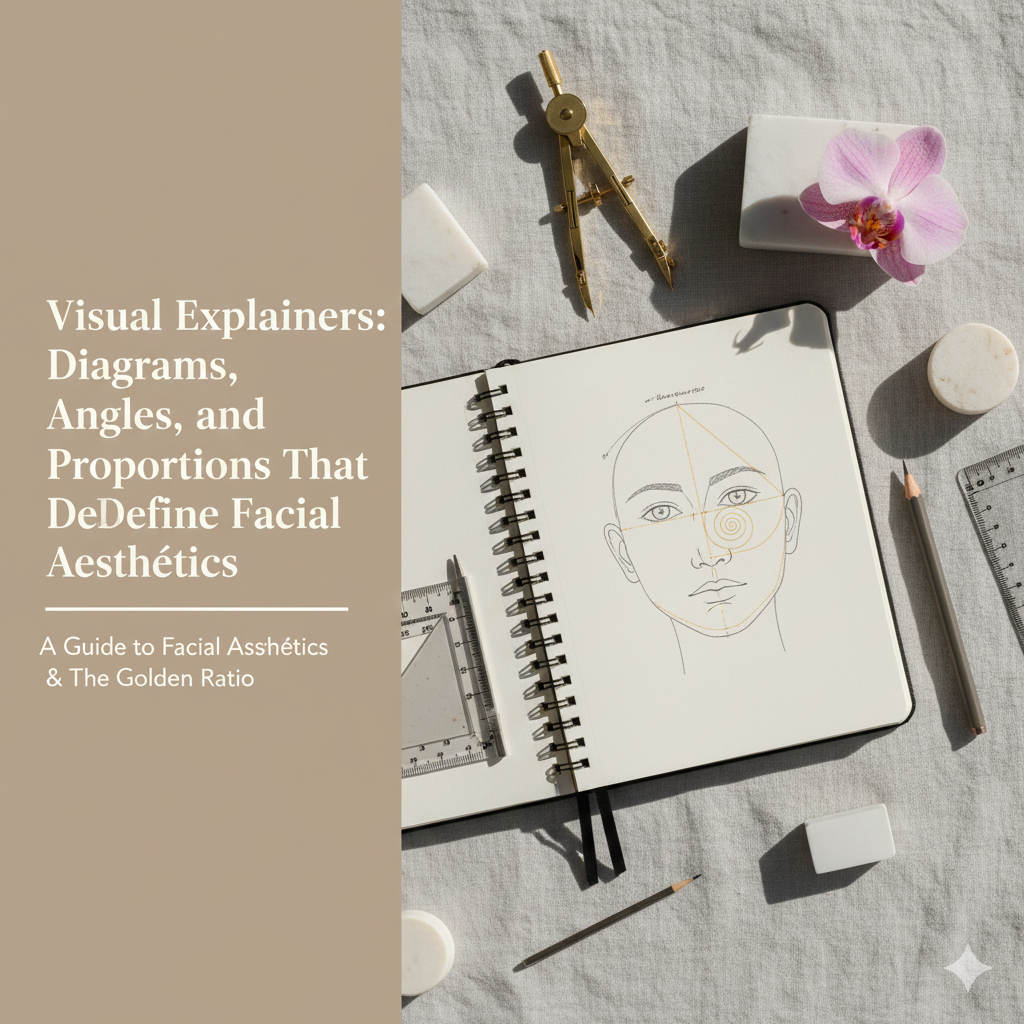
The continued evolution of facial thirds analysis demonstrates how traditional aesthetic concepts adapt to new technologies while maintaining their fundamental relevance to human beauty perception.
| Facial Third | Anatomical Boundaries | Common Disproportions | Aesthetic Impact & Solutions |
|---|---|---|---|
| Upper Third | Hairline to Glabella | High or Receding Hairline Creating Long Upper Third | Can be corrected through hairline lowering procedures, forehead reduction surgery, or strategic hairstyling techniques to create better vertical balance. |
| Middle Third | Glabella to Subnasale | Short Midface Syndrome or Vertical Maxillary Excess | Often related to underlying cheekbone development, orbital structure, or maxillary proportions, addressed through orthognathic surgery, cheek implants, or midface lifting procedures. |
| Lower Third | Subnasale to Menton | Short Chin (Microgenia) or Long Chin (Macrogenia) | Typically corrected through genioplasty, sliding chin advancement, chin implants, or orthognathic surgery to achieve proper vertical proportion and facial balance. |
https://www.youtube.com/watch?v=facial-thirds-explained
2. The Golden Ratio: Understanding Horizontal Facial Proportions and Mathematical Harmony
The Golden Ratio, mathematically represented as Phi ($\Phi \approx 1.618$), represents one of the most fascinating and widely applied mathematical concepts in facial aesthetics, used to assess horizontal harmony and proportional relationships throughout facial structures.
This irrational number, discovered in antiquity and celebrated throughout art history, appears consistently in nature and has been applied to facial analysis for centuries as a benchmark for ideal proportional relationships in human beauty.
When applied to facial aesthetics, the Golden Ratio suggests that the most harmonious faces demonstrate specific proportional relationships where key measurements approximate the 1.618 ratio that characterizes this mathematical constant.
Contemporary research has validated many applications of the Golden Ratio in facial analysis while also recognizing the importance of ethnic variation and individual characteristics in aesthetic assessment and treatment planning.
The psychological appeal of Golden Ratio proportions appears rooted in human cognitive processing, where the brain naturally recognizes and prefers these specific proportional relationships across various visual stimuli.
Advanced digital analysis tools now allow practitioners to measure Golden Ratio adherence with unprecedented precision, providing valuable data for aesthetic planning and outcome assessment in clinical practice.
The application of Golden Ratio principles extends beyond static measurements to dynamic facial expressions, where proportional relationships during animation contribute significantly to perceived attractiveness and emotional expressiveness.
Understanding Golden Ratio proportions enables practitioners to identify specific areas where facial features may benefit from enhancement to achieve better harmonic relationships and improved overall aesthetic balance.
The integration of Golden Ratio analysis with other aesthetic assessment methods creates a comprehensive framework for facial evaluation that accounts for both mathematical ideals and individual characteristics.
The continued relevance of this ancient proportional concept in modern aesthetic practice demonstrates how fundamental mathematical principles continue to inform our understanding of human beauty across technological advancements.
- Rule of Fifths: The face is ideally divided into five equal vertical segments when viewed from the front, with the width of one eye being precisely equal to the distance between the eyes (intercanthal distance) and also matching the distance from each eye’s outer corner to the side of the face.
- Nasal Width to Mouth Width Ratio: The width of the mouth should ideally be approximately 1.618 times the width of the nose when measured from alar base to alar base, creating harmonious central facial proportions.
- Facial Length to Width Ratio: The total facial length from trichion to menton should ideally relate to facial width at the zygomatic arches in a 1.618:1 proportion for optimal overall facial balance.
- Eye Section Proportions: The distance from the hairline to the eyebrow should relate to the distance from eyebrow to nasal tip and from nasal tip to chin in Golden Ratio proportions for ideal vertical distribution.
- Lip and Chin Relationship: The vertical distance from subnasale to stomion (lip junction) should relate to the distance from stomion to menton in approximately 1:1.618 proportion for balanced lower facial aesthetics.
Visual Explainer Applications: Contemporary aesthetic diagrams frequently use digital calipers, proportional grids, and overlay templates to demonstrate precisely how individual facial measurements deviate from the ideal 1.618 ratio in these critical horizontal measurements.
The clinical application of Golden Ratio analysis enables practitioners to identify specific proportional discrepancies that may benefit from targeted aesthetic interventions to achieve better facial harmony and improved aesthetic outcomes.
Modern imaging software incorporates Golden Ratio templates that can be customized for different ethnic backgrounds and individual characteristics, providing personalized assessment tools for aesthetic planning.
The psychological impact of Golden Ratio proportions extends beyond mere attractiveness to influence perceptions of health, vitality, and genetic fitness, reflecting the deep evolutionary roots of these aesthetic preferences.
Understanding the limitations of strict Golden Ratio application is equally important, as cultural variation, individual uniqueness, and ethnic characteristics all influence ideal proportional relationships in facial aesthetics.
The integration of Golden Ratio principles with contemporary aesthetic science represents the evolution of ancient beauty concepts into modern clinical practice, blending artistic tradition with scientific precision.
Advanced research continues to explore the neurological basis for Golden Ratio preferences, investigating how the human brain processes these specific proportional relationships and why they consistently correlate with perceived attractiveness.
The practical application of Golden Ratio analysis in treatment planning helps ensure that aesthetic enhancements maintain natural proportions and harmonious relationships between facial features.
The enduring appeal of Golden Ratio proportions across cultures and historical periods suggests that these mathematical relationships tap into fundamental aspects of human visual perception and aesthetic preference.
Mastering Golden Ratio applications in facial aesthetics provides practitioners with a powerful tool for achieving natural-looking, harmonious results that align with deep-seated human preferences for specific proportional relationships.
https://www.youtube.com/watch?v=golden-ratio-face-analysis