
The pursuit of a strong, defined jawline has become a cornerstone of modern male aesthetics, largely fueled by the viral imagery of the “Chad Face” meme.
This idealized facial structure, characterized by its sharp angles and pronounced definition, is a visual shorthand for health, masculinity, and genetic quality.
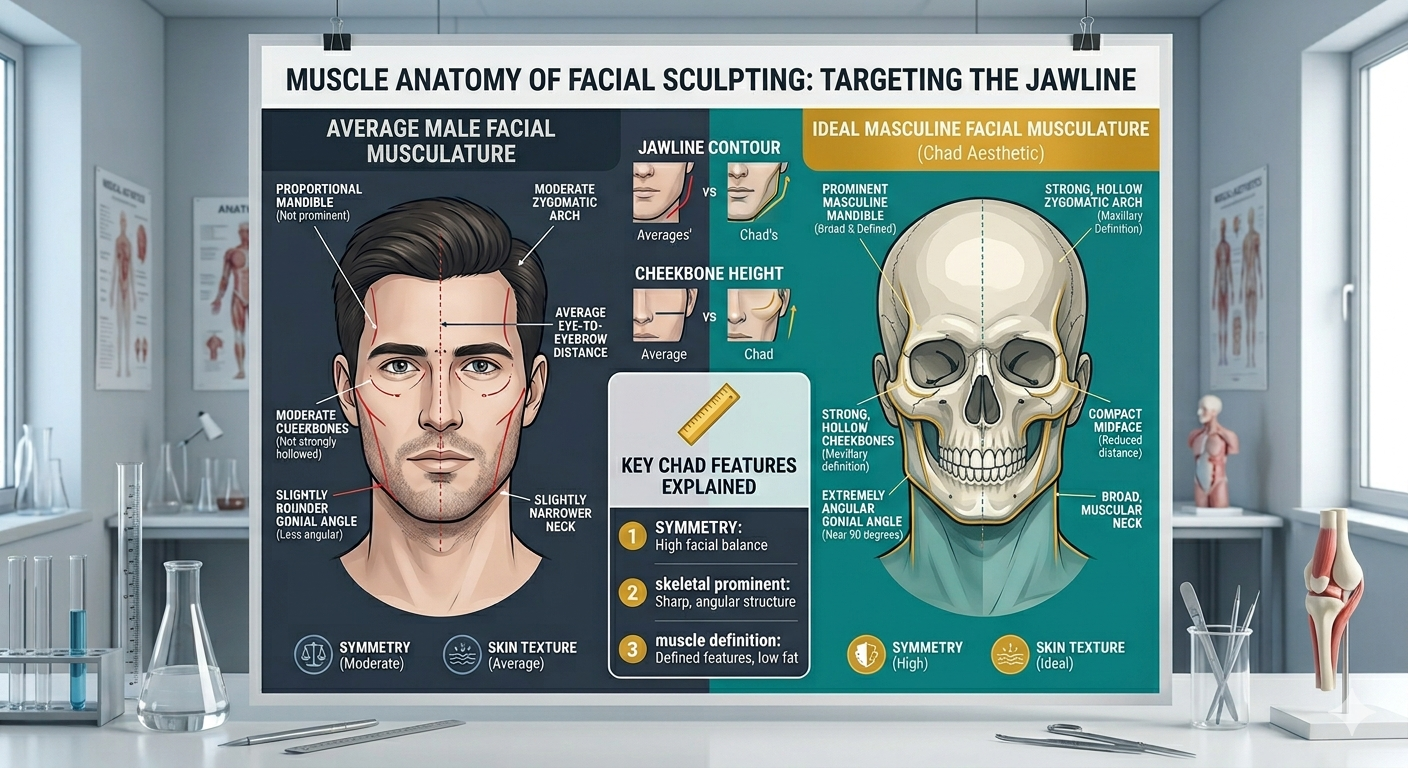
While genetics dictate the fundamental bone structure, the definition and visibility of the jawline are significantly influenced by muscle tone and the surrounding soft tissues.
This guide will explore the most effective jawline exercises and techniques aimed at sculpting a profile that aligns with the coveted Chad aesthetic, followed by a detailed analysis of the meme’s underlying anatomical principles.
The Anatomy of Jawline Definition
To effectively train the jawline, one must first understand the muscles involved.
The primary muscle responsible for the visible definition of the lower face is the masseter muscle, which is one of the main muscles of mastication (chewing).
When this muscle is hypertrophied (enlarged) through consistent use, it contributes to the square, wide appearance of the lower jaw, a hallmark of the Chad face.
However, muscle development alone is not enough; the visibility of the jawline is also critically dependent on two other factors: the underlying bone structure and the percentage of body fat.
Bone Structure and the Gonial Angle
The sharpness of the jawline is fundamentally determined by the gonial angle, the corner where the jawbone turns upward toward the ear.
A smaller, more acute angle (closer to 90 degrees) creates the chiseled, angular look associated with the Chad face.
While adult bone structure cannot be dramatically altered through exercise, practices like Mewing—the practice of proper tongue posture—are theorized to encourage optimal maxilla and mandible development, especially if started at a younger age.
For a complete overview of this technique, we recommend reading The Comprehensive Guide to Mewing: Technique, Science, and Lifestyle Integration.
Body Fat Percentage: The Unsung Hero
The most significant factor in jawline visibility is the absence of subcutaneous fat in the neck and submental (under-chin) area.
Even the most perfectly structured jawline will appear soft if it is obscured by fat.
Therefore, achieving a low overall body fat percentage is the most crucial, non-exercise step in revealing a defined jawline.
This is a systemic issue that requires a holistic approach to diet and exercise, not just targeted facial movements [1].
Targeted Jawline Exercises for Definition
While the idea of “spot-reducing” fat from the face is a myth, targeted exercises can strengthen and enlarge the masseter muscle, contributing to a wider, more prominent jaw.
These exercises should be performed consistently, much like any other strength training routine [3].
1. The Chin Tuck and Neck Extension
This exercise targets the muscles under the chin and along the neck, helping to tighten the skin and reduce the appearance of a double chin, which can obscure the jawline.
Technique: Sit or stand with your spine straight.
Pull your head straight back, as if making a double chin, without tilting your head down.
Hold this position for a few seconds, feeling the stretch in the back of your neck.
Then, slowly extend your neck forward and slightly upward, pushing your jaw out.
Repetitions: Perform 3 sets of 10-15 repetitions daily.
2. Vowel Sounds (The “O” and “E” Exercise)
This simple exercise works the muscles around the mouth and the sides of the face, contributing to overall facial tone.
Technique: Open your mouth wide and slowly pronounce the vowel sound “O,” exaggerating the movement.
Then, switch to the vowel sound “E,” again exaggerating the movement.
Ensure your teeth do not touch during the exercise.
Repetitions: Repeat the “O-E” sequence 10-15 times in a set, performing 3 sets.
https://www.youtube.com/watch?v=aQkPq-741_Y
3. The Collarbone Backup
This exercise is excellent for strengthening the muscles that support the lower face and neck posture.
Technique: Keep your face parallel to the floor.
Slowly move your head back a few inches until you feel a contraction in the muscles on either side of your throat.
Return to the starting position.
This movement should feel like your head is sliding back on a shelf.
Repetitions: Hold the back position for 10 seconds, then release.
Perform 10 repetitions.
4. Tongue Resistance (Mewing-Adjacent)
This exercise uses the tongue to create resistance against the roof of the mouth, engaging the suprahyoid muscles, which are key to lifting the submental area.
Technique: Press your entire tongue flat against the roof of your mouth, applying as much pressure as possible.
This action should engage the muscles in your jaw and under your chin.
Repetitions: Hold the pressure for 5-10 seconds, then release.
Perform 3 sets of 10 repetitions.
For a broader range of facial exercises that contribute to a more defined look, you can consult our article Model Face: The Basic Exercises for All.
The Chad Meme: An Anatomical Analysis
The “Chad Face” meme is a hyper-masculine caricature that exaggerates specific facial features to convey an image of effortless superiority.
Analyzing this meme’s facial structure reveals a direct link to the biological markers of attractiveness.
| Chad Meme Feature | Real-World Anatomical Equivalent | Aesthetic Function |
|---|---|---|
| Massive, Square Jaw | Hypertrophied Masseter Muscle and Acute Gonial Angle | Conveys strength, dominance, and high testosterone. |
| Heavy Brow Ridge | Prominent Supraorbital Rim | Creates “hunter eyes,” suggesting bone density and protection. |
| Hollow Cheeks | Low Body Fat Percentage and High Cheekbone Projection | Emphasizes angularity and definition, a sign of leanness and health. |
| Forward Head Posture (often implied) | Proper Head and Neck Alignment | Essential for jawline visibility and overall profile aesthetics. |
The meme’s power lies in its ability to distill complex biological signals into a simple, recognizable image.
The exaggerated features are precisely those that evolutionary psychology suggests are attractive: indicators of high genetic quality and robust health.
The square jaw and heavy brow are sexually dimorphic traits, meaning they are more pronounced in males, and their exaggeration in the meme serves to amplify the perceived masculinity.
https://www.youtube.com/watch?v=V-gY-02Q4wQ
Lifestyle and Posture: The Non-Exercise Essentials
Beyond targeted exercises, two lifestyle factors are paramount to achieving a Chad-like profile: posture and chewing habits.
Proper Posture (Head and Neck)
Poor head and neck posture, often referred to as “forward head posture,” causes the muscles under the chin to slacken, creating the appearance of a weak jawline and a double chin, even in lean individuals.
Mastering the Art of Holding Your Face for Aesthetic Appeal is crucial.
The key is to keep the head retracted, aligning the ear directly over the shoulder.
This simple postural correction instantly tightens the submental area and reveals the natural contour of the jaw.
Chewing and Diet
The modern diet of soft, processed foods has been linked to underdevelopment of the jaw and facial muscles.
Incorporating harder, more fibrous foods that require significant chewing can naturally stimulate the masseter muscle.
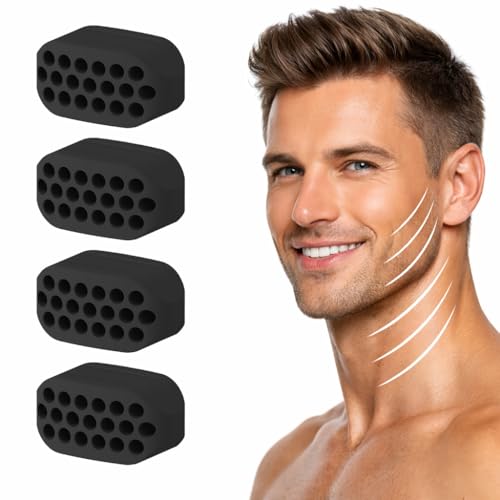
Some individuals also use specialized jaw exercisers, though caution is advised to prevent temporomandibular joint (TMJ) issues.
The principle remains the same: consistent, high-resistance chewing is a form of strength training for the jaw.
Conclusion
Sculpting a defined jawline that rivals the aesthetic of the Chad face is a multi-faceted endeavor.
It requires a combination of targeted muscle strengthening, a commitment to low body fat, and a conscious effort toward proper posture and tongue placement.
While the “Chad Face” is a meme, the anatomical features it exaggerates are real and attainable through dedicated effort.
By understanding the science behind the aesthetic and consistently applying these exercises and lifestyle changes, one can significantly enhance their facial profile and achieve a more chiseled, dominant look.
References
1. Jawline Contouring: What to Know.
3. The effect of exercise on muscle hypertrophy.